The story of London
Before the Romans there was no major settlement where London stands. At first the army just built roads through, linking its first capital at Colchester to the ports of the south-east. Then it saw what the place could be. Small hills on the north bank of the Thames stood clear of floods; ships could sail here straight from the North Sea; and a bridge could reach the islands on the south side, where Southwark is now.1
By AD 60 about 10,000 people lived in Londinium. Many had come from across the empire: soldiers, merchants, officials and the people of their households, including enslaved people. On the edge of town, glassworkers lived in traditional British roundhouses, perhaps enslaved Britons made to work there.1
Burnt
In AD 60 or 61, Boudica, queen of the Iceni, rose against Rome, and her followers burnt Londinium to the ground. Many Londoners probably had time to escape. The army crushed the revolt, built a fort at Fenchurch Street, and rebuilding began with the port and the roads.1 Around 62 or 63, military engineers began timber quays along the north bank; in time the port ran about 650 metres, from where Cannon Street station is now to Custom House.2
The capital
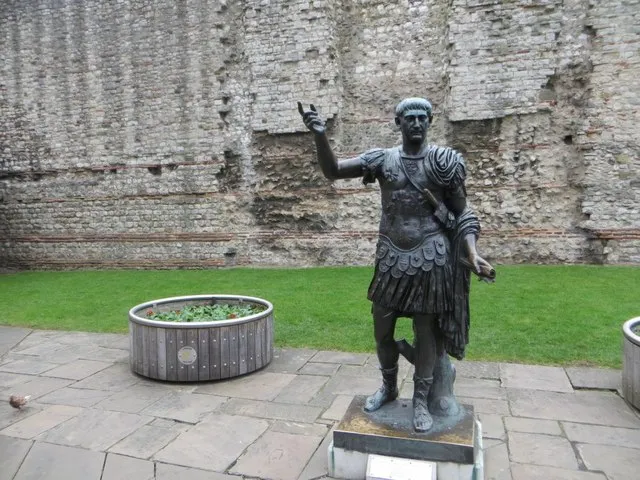
London became the capital of Roman Britain, where the governor lived when he was not on campaign. Half a century after Boudica it was rebuilt grandly: a stone fort for 1,000 soldiers where the Barbican is now, a bigger stone amphitheatre, and great public baths. The emperor Hadrian visited with the empress Sabina. Then, in the 120s, fire destroyed much of the town again, whether by one fire or several, by accident or on purpose, no one knows. Even so, about 30,000 people lived here by AD 150.1
Through the port came wine, olive oil, fish sauce, figs, fine pottery, glass, silk, ivory and amber; marble from Greece, Turkey and Egypt; and building stone from Kent, because London has none of its own. Lead went out, from mines in Somerset. So did people. A wooden writing tablet records the sale of a young enslaved woman named Fortunata, who came from Gaul.2
Walls and decline
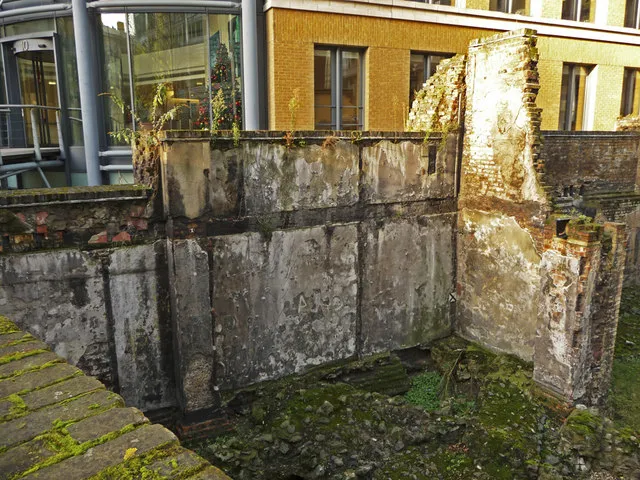
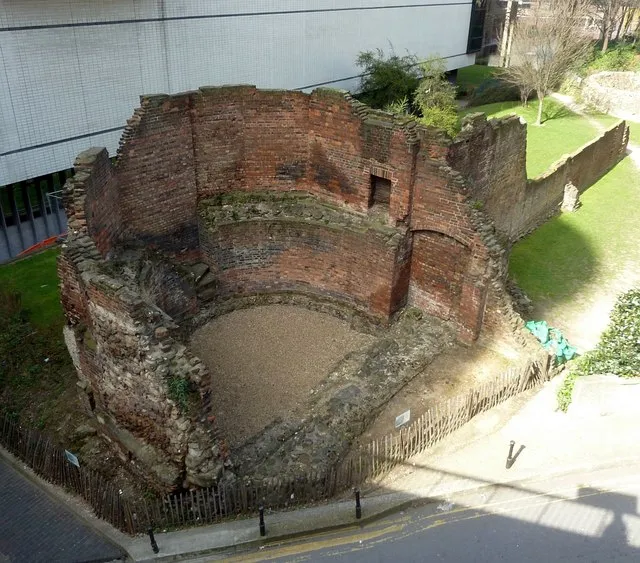
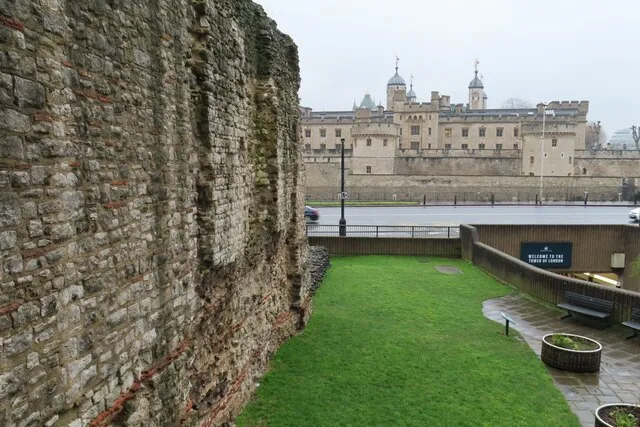
Around AD 200 the province was split in two, and London became the capital of only the southern half. Though no enemy threatened it, the town was ringed with a stone wall about 3 kilometres long, with gates at Ludgate, Newgate, Aldersgate, Bishopsgate and Aldgate. Around 250 the port closed; trade had dropped and army supplies now went north. About 25 years later a second wall along the river shut the town off from the water.12
From 286 the rebel admiral Carausius, and then Allectus, held London and minted coins here, until it was taken back in 296. The forum and basilica were pulled down. In 313 the emperors allowed people to follow any religion, and a year later a bishop from London is on record. With Saxon raiders on the Thames, towers were added to the walls, partly built with stones taken from cemeteries.1
Early in the 5th century Roman officials and soldiers left, and the emperor Honorius refused to defend Britain. With no one running things and supplies drying up, buildings were left to crumble. London was largely empty by 450. Saxons settled nearby but mostly kept away from the ruins.1
Where the evidence is unclear
The fire of the 120sMuch of the town was destroyed by fire in the 120s. Whether it was one fire or several, and accidental or deliberate, is not known. With timber houses and open fires everywhere, the risk was always high.1
Why build the wall?There was no immediate military threat around AD 200. The wall may have been a show of power as much as a defence.1