The story
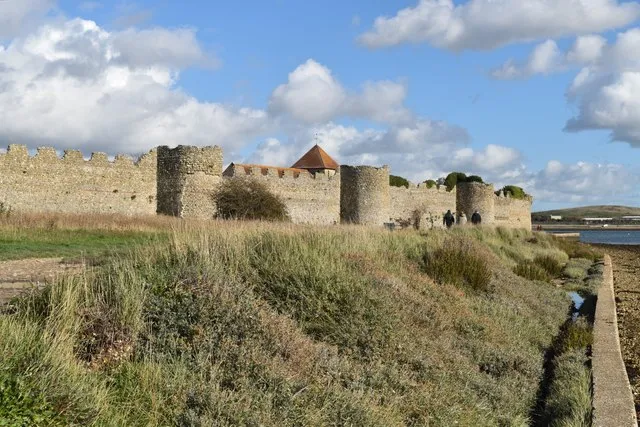
In the 3rd century, raiders from across the North Sea, often called Saxon pirates, attacked the south and east coasts. A chain of new forts went up to guard the harbours: the forts of the Saxon Shore. Portchester is the best preserved.2 In London, the port closed around 250, and about 275 a wall was built along the river to shut the town off from the water.1
An emperor of Britain
In about 285, Carausius was put in charge of the Roman fleet in the Channel. Condemned to death by the co-emperor Maximian, he rebelled, with the fleet behind him, and declared himself emperor in Britain.2 He seized London in 286 and minted his own coins there. He and his successor Allectus held it until 296, when Britain was taken back.1
Holding on
In the 4th century Britain was divided into four provinces. Christianity was allowed from 313, and in 314 a bishop of London is recorded. Towers were added to London’s walls around 350 against Saxon raids.1 Across the empire, money was short: the government paid out more than it raised, and inflation hit towns hard. At Wroxeter the baths grew shabby and part of the forum was abandoned early in the 4th century.5
Around 410
Between 400 and 410 the Roman army and officials withdrew. The emperor Honorius refused to defend Britain, and London began to empty.1 No new Roman coins came after that: the latest found on Hadrian’s Wall were minted between 403 and 406.3 Roman soldiers were paid in coin; when new coin stopped coming, so did the pay.
What came after
Nobody sacked Wroxeter. Its great buildings were taken down as they became unsafe, and by the middle of the 5th century the centre was empty, though a small community stayed on by the river crossing.5 At Birdoswald, people built timber halls on the site of the old granaries and lived there, without a break, probably into the 6th century. The soldiers had long been local men; with no empire to pay them, they may have become something like a war band, still thinking of themselves as Roman.4 London was largely empty by about 450. Saxon settlers arrived nearby, but mostly kept away from the old Roman city.1