A civilisation in Mesoamerica · about 1000 BC to today
The Maya
The Maya world spread across parts of what are now Mexico, Belize, Guatemala, Honduras and El Salvador.1 Maya peoples have lived there for at least three thousand years: the oldest Maya monument yet found was built about 1000 BC.2 They built cities in the forest, wrote their own script, and counted time in days, twenties and four-hundreds.6 And they are still there. In Guatemala’s census of 2018, about 6.2 million people said they were Maya.10
Maya words keep their apostrophes, as in K’inich and Janaab’, which mark a catch in the voice.
Six chapters
Maya scribes wrote in pairs of columns, two glyph blocks across, then down to the next pair. These chapters run the same way.
- Chapter oneBefore kingsWho built the oldest and largest Maya monument, and why does it surprise archaeologists?About 1000 to 800 BC
- Chapter twoCities under the treesHow did lasers fired from aircraft change what we know about Maya cities?Found in 2016 and 2017; most from AD 650 to 800
- Chapter threeReading the glyphsHow did people learn to read Maya writing again?Writing from about 300 BC; read again from the 1950s
- Chapter fourCounting the daysHow did the Maya count time, and what really happened in 2012?From a zero day in 3114 BC to 21 December 2012
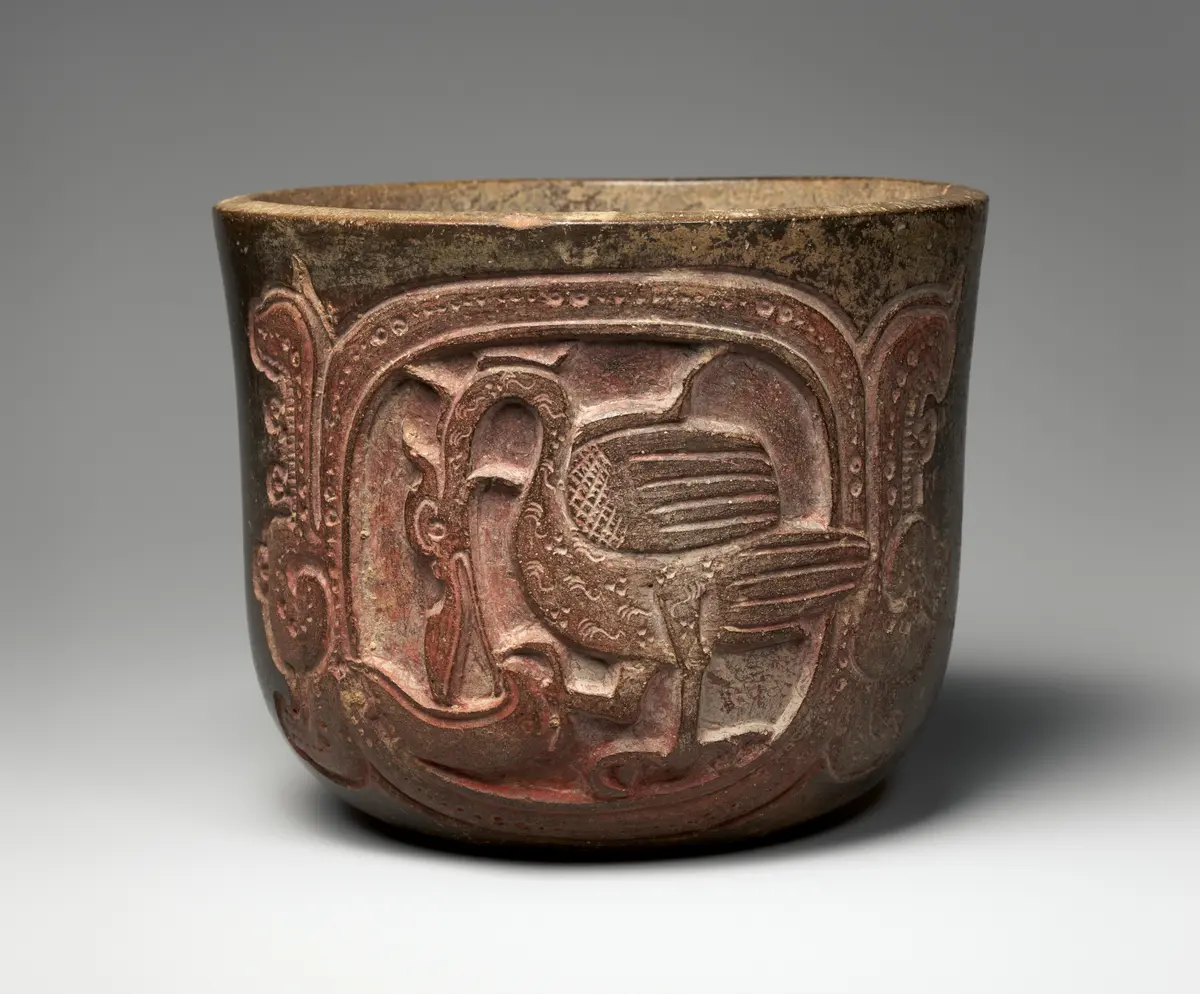
- Chapter fiveA king under the templeWhat did archaeologists find beneath the Temple of the Inscriptions at Palenque?Buried in AD 683; found in 1952
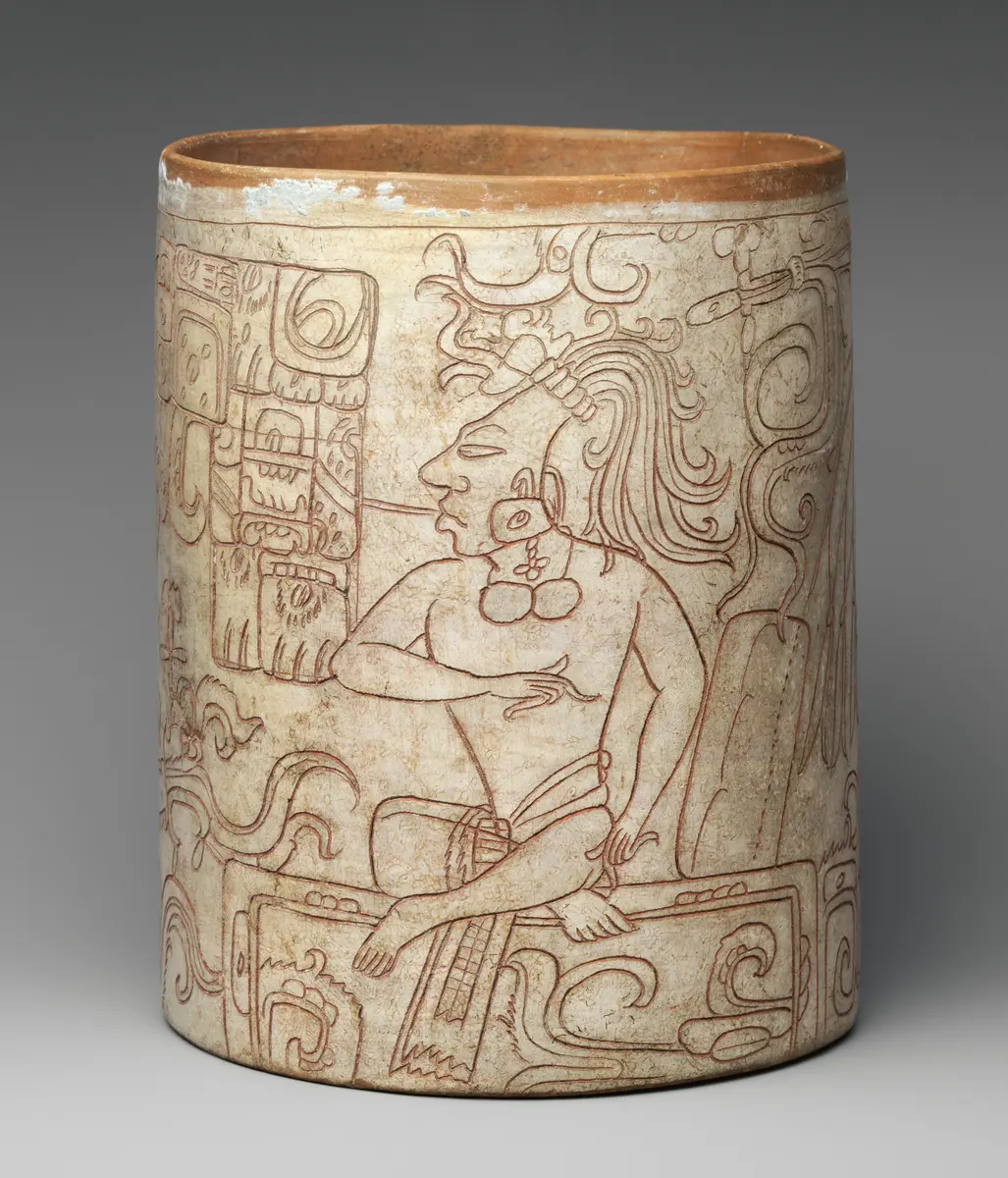
- Chapter sixDrought, and the Maya todayWhy were the great southern cities left, and did the Maya disappear?About AD 800 to 1000, and today
On the Maya’s own clock
Each band is one baktun of 144,000 days, about 394 years
The Long Count counts days from a zero day, written 13.0.0.0.0, which fell on 11 August 3114 BC. Its places count days, twenties of days, 360 days, 7,200 days and 144,000 days. The thirteenth baktun ended on 21 December 2012, when the count read 13.0.0.0.0 again.6 Chapter four tells how it works.
Where
- Aguada FénixBuilt about 1000 to 800 BC. The oldest and largest Maya monument known, an earthen platform about 1.4 kilometres long in south-eastern Mexico.
- San BartoloGlyphs painted about 300 to 200 BC. Where the oldest Maya writing yet found was painted on a wall, in Petén, Guatemala.
- Piedras NegrasIts stelae were read as history in 1960. The Maya city in Guatemala whose stelae Tatiana Proskouriakoff read as the lives of kings.
- Palenque (Lakamha’)Pakal buried here in AD 683. The city in Chiapas, Mexico, where the tomb of K’inich Janaab’ Pakal lies under the Temple of the Inscriptions.
- Lake ChichancanabIts mud records the drought of about AD 800 to 1000. A lake in Yucatán, Mexico, whose layers of gypsum show how much the rain failed.
People in these chapters
- K’inich Janaab’ PakalKing of Palenque, laid in his tomb in AD 683
- Tatiana ProskouriakoffShowed in 1960 that the stelae tell the lives of kings
- Alberto Ruz L’huillierLed the team that found Pakal’s tomb in 1952
- Ernst FörstemannWorked out the Long Count from the Dresden Codex
- Takeshi InomataLed the work at Aguada Fénix
Sources for this page
Every number on this page comes from one of these. How we check.
Last reviewed 12 November 2026. Spotted a mistake? Tell us.
- Maxwell Museum of Anthropology, University of New Mexico. Maya hieroglyphs and math (learning resource). maxwellmuseum.unm.edu/sites/default/files/public/Maya%20hieroglyphs%20and%20math.pdfUsed for: Maya numbers written with dots, bars and a shell for nought, in twenties; codices as folded books; the Maya world across parts of Mexico, Belize, Guatemala, Honduras and El Salvador. Checked 12 November 2026.
- Mace, M. (2020). Largest, oldest Maya monument suggests importance of communal work. University of Arizona News, 3 June 2020. Reporting Inomata, T., Triadan, D. and others (2020), Monumental architecture at Aguada Fénix and the rise of Maya civilization, Nature 582, 530–533. news.arizona.edu/news/largest-oldest-maya-monument-suggests-importance-communal-workUsed for: Aguada Fénix: its size, nine causeways, dating to 1000 to 800 BC from 69 charcoal samples, found from lidar in 2017, no sign of powerful rulers, and Ceibal as the earlier record. Checked 12 November 2026.
- Tulane University News (2018). Unprecedented study confirms massive scale of lowland Maya civilization. 27 September 2018. Reporting Canuto, M. A., Estrada-Belli, F., Garrison, T. G. and others (2018), Ancient lowland Maya complexity as revealed by airborne laser scanning of northern Guatemala, Science 361, eaau0137. news.tulane.edu/pr/unprecedented-study-confirms-massive-scale-lowland-maya-civilizationUsed for: The lidar survey of northern Guatemala: more than 2,100 square kilometres, 61,480 structures, causeways, farmland, defences, and 7 to 11 million people in AD 650 to 800. Checked 12 November 2026.
- Mesoweb (2006). Early Maya writing at San Bartolo, Guatemala. Report on Saturno, W. A., Stuart, D. and Beltrán, B. (2006), Early Maya writing at San Bartolo, Guatemala, Science 311, 1281–1283. www.mesoweb.org/reports/SanBartoloWriting.htmlUsed for: The ten painted glyphs at San Bartolo, dated 300 to 200 BC, of which one, AJAW, “lord”, can be read. Checked 12 November 2026.
- Archaeology Magazine. Tatiana Proskouriakoff: translating Maya history. Archive, September/October 2011. archive.archaeology.org/1109/features/tatiana_proskouriakoff.htmlUsed for: Proskouriakoff’s study of more than 40 stelae at Piedras Negras: seven series, the birth and accession glyphs, and the kings of Yaxchilan. Checked 12 November 2026.
- Elwes, R. (2026). Endless progress of time: the Mayan Long Count. Plus Magazine, University of Cambridge, 24 March 2026. plus.maths.org/endless-progress-time-mayan-long-countUsed for: The units of the Long Count, its count in twenties with eighteen in the third place, the zero date of 11 August 3114 BC, 21 December 2012, and a date from Yaxchilan. Checked 12 November 2026.
- Velásquez García, E. (2017). Historia del códice de Dresde. Instituto Nacional de Antropología e Historia, Códice de Dresde (online edition). www.codicededresde.inah.gob.mx/wp-content/themes/codiceDresde/pdf_ensayos/historiadedresde.pdfUsed for: The Dresden Codex: bought in Vienna in 1739, Förstemann’s discovery of the Long Count and the Venus table in its pages, and water damage in the bombing of Dresden. Checked 12 November 2026.
- Instituto Nacional de Antropología e Historia (2023). Se cumplen 71 años del descubrimiento de la tumba de Pakal ‘el Grande’, en Palenque. Boletín 372, 15 June 2023. inah.gob.mx/images/boletines/2023/372/Boletin%20372.pdfUsed for: The tomb of K’inich Janaab’ Pakal: found by Alberto Ruz’s team on 15 June 1952, almost 20 metres down, sealed since 28 August 683, the lid 3.8 by 2.2 metres, opened on 27 November 1952. Checked 12 November 2026.
- Evans, N. P., Bauska, T. K., Gázquez-Sánchez, F., Brenner, M., Curtis, J. H. and Hodell, D. A. (2018). Quantification of drought during the collapse of the classic Maya civilization. Science 361 (6401), 498–501. research-portal.st-andrews.ac.uk/en/publications/quantification-of-drought-during-the-collapse-of-the-classic-maya/Used for: Rainfall fell by 41 to 54 per cent, and by up to 70 per cent at the worst, in about AD 800 to 1000, measured from gypsum in Lake Chichancanab. Checked 12 November 2026.
- Instituto Centroamericano de Estudios Fiscales (2025). Pueblos indígenas en Guatemala: presentación, con base en datos del XII Censo de Población y VII de Vivienda (Guatemala, 2018). icefi.org/sites/default/files/presentacion_ippi_2025_0.pdfUsed for: In the 2018 census, 41.7 per cent of people in Guatemala, about 6.2 million, said they were Maya; the National Languages Law, Decree 19-2003. Checked 12 November 2026.
- Rodríguez, L. (2024). Protomaya, el origen de las lenguas mayas en Guatemala. Agencia Guatemalteca de Noticias, 24 September 2024. agn.gt/protomaya-el-origen-de-las-lenguas-mayas-en-guatemala/Used for: Guatemala’s 25 official languages, 22 of them Maya, recognised by Decree 19-2003. Checked 12 November 2026.
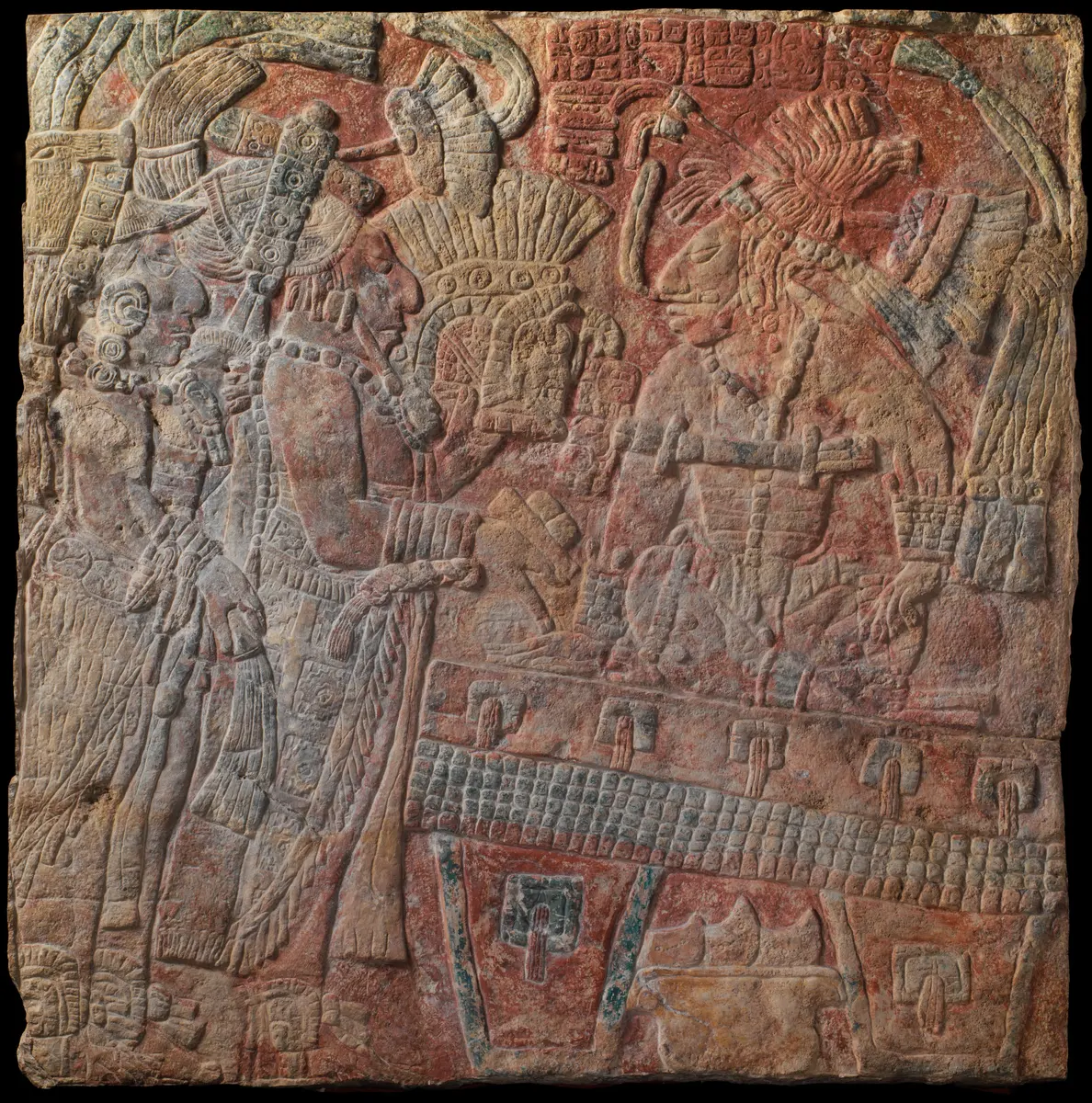
- The Metropolitan Museum of Art. Relief with enthroned ruler. Maya, Guatemala, limestone and paint, 770 CE. Collection record 313240, Open Access (CC0). www.metmuseum.org/art/collection/search/313240Used for: A carved relief of a ruler on a throne, 88.9 cm high. Checked 12 November 2026.