A civilisation · About AD 410 to 875
Anglo-Saxon Britain
After Rome, Britain’s written record goes almost silent. What we know comes from three kinds of evidence, and they do not always agree. Ask each one the same questions, and see where the answers come from.
The evidence board
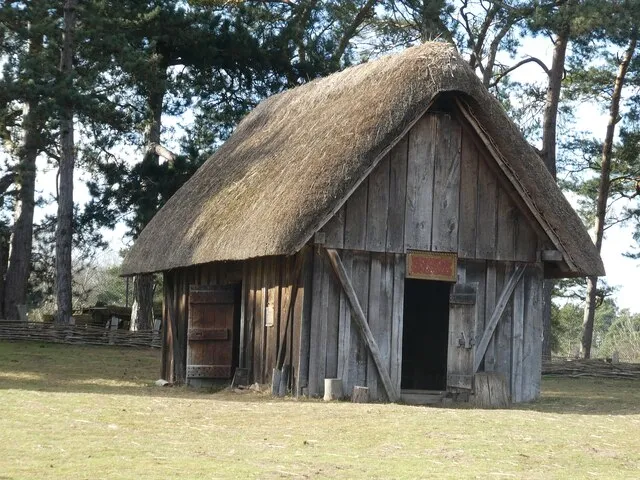
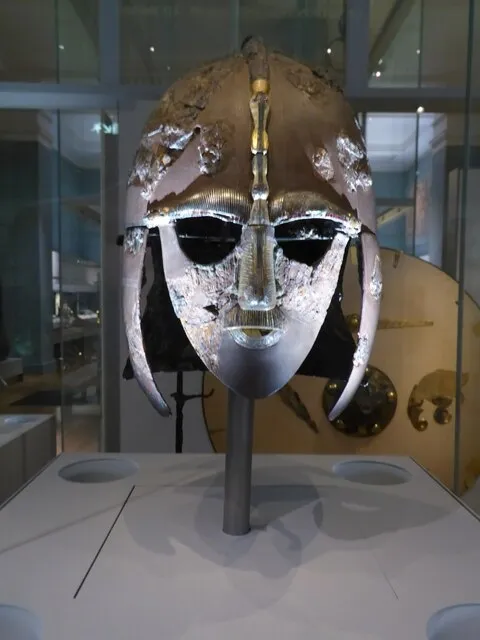
| The bookWhat people wrote down: Bede’s history, a scholar’s letter, the church’s records. | The groundWhat archaeologists dig up where people lived: post holes, hollows, hearths, rubbish. | The graveWhat was buried with the dead, and what the burial itself shows. | |
|---|---|---|---|
| When did they come? | In 449, says Bede, “with three long ships”.1Read | West Stow was already lived in from about 420, earlier than Bede’s date.4Read | Silent hereSutton Hoo is about 625, two centuries on. It cannot date the arrival.5 |
| Who were they? | Angles, Saxons and Jutes, from “the three most powerful nations of Germany”.1Read | A slower, “much more mixed” change, different from place to place. DNA studies so far disagree.3Read | Silent hereNo name was written on anything in the ship burial.5 |
| How did people live? | Silent hereBede tells of kings and churchmen, not of farmers’ houses. | Seven timber halls and 68 small sunken-featured buildings; two or three family groups at a time.4Read | Only for the very richest: 263 finds from one ship burial.6Read |
| Who ruled? | Commanders who “are said to have been Hengist and Horsa”; later, King Oswald, who called Aidan in 635.1,7Read | Silent hereA village of a few families says little about kings. | A ship burial rich enough for a king. The leading theory: Rædwald of East Anglia.5Read |
| What did they believe? | Augustine’s mission from Rome in 597; Aidan from Iona in 635; Alcuin’s horror at the raid of 793.2,7Read | The ruins on Lindisfarne today are of a later priory, not Aidan’s monastery.7Read | A king buried in a ship with his belongings, about a generation after Augustine came.5,2Read |
Each square sums up a chapter, with its source. A grey square is where that kind of evidence cannot answer. Pictures: the rebuilt hall at West Stow, Rob Farrow, CC BY-SA 2.0; the Sutton Hoo helmet, Philip Halling, CC BY-SA 2.0; both via Geograph.
Where the book and the ground disagree
Bede dates the arrival to 449. The village at West Stow was already being lived in from about 420. That is normal: the written story and the archaeology are two different witnesses.
Where the evidence was found
- The groundWest StowAbout 420 to the early 600sA village of halls and sunken-floored buildings, dug from 1965 to 1972 and rebuilt on the spot.4
- The graveSutton HooShip burial about 625A burial ground of mounds in Suffolk, with a king’s ship burial under Mound 1.5
- The bookLindisfarneMonastery from 635; monks leave in 875Aidan’s island monastery, home of Cuthbert and the Lindisfarne Gospels, raided by Vikings in 793.7
- The bookWhitbySynod of 664Where a decision about the church in England was made in 664.2
Names, and where we meet them
- The bookBedeThe Northumbrian monk whose history gives us 449, the three ships and the three peoples.
- The bookHengist and HorsaThe first commanders, Bede says, though only that they “are said to have been”.
- The bookAidan and CuthbertThe founder of Lindisfarne, in 635, and its saint, who died in 687.
- The groundStanley WestLed the dig at West Stow, 1965 to 1972.
- The groundBasil BrownNoticed West Stow’s finds in 1947, eight years after he found the Sutton Hoo ship.
- The graveEdith PrettyThe landowner who had the Sutton Hoo mounds dug, from 1938.
- The graveRædwaldKing of East Anglia, and the leading theory for who lay in the ship.
The chapters
- iWho came after Rome?Who were the Anglo-Saxons, and how did they live?About AD 410 to 650
- iiThe ship in the fieldWhat does Sutton Hoo tell us about Anglo-Saxon kings?About AD 625, dug 1938 to 1939
- iiiSaints and raidersWhy did the Viking raid on Lindisfarne shock Europe?AD 635 to 875
For school. National curriculum, Key Stage 2: “Britain’s settlement by Anglo-Saxons and Scots” and “the Viking and Anglo-Saxon struggle for the Kingdom of England”. The first two chapters fit the settlement study. The third starts the Viking one; the rest of that story, to Edward the Confessor, is not written yet. We are not an exam board; check against your own course.
Sources for this page
Every number on this page comes from one of these. How we check.
Last reviewed 12 November 2026. Spotted a mistake? Tell us.
- Bede, Ecclesiastical History of the English People, Book I, chapter 15. Internet Medieval Sourcebook, Fordham University. sourcebooks.fordham.edu/basis/bede-book1.aspUsed for: Bede’s account of the coming of the Angles, Saxons and Jutes, and the peoples he said came from each. Checked 12 November 2026.
- English Heritage. The Story of England: Early Medieval England. www.english-heritage.org.uk/learn/story-of-england/early-medieval/Used for: The span from the end of Roman rule in about 410 to 1066, Augustine in 597, Whitby in 664 and the Viking attack of 793. Checked 12 November 2026.
- Hills, C. (McDonald Institute for Archaeological Research, University of Cambridge). The Anglo-Saxon invasion and the beginnings of the “English”. Our Migration Story. www.ourmigrationstory.org.uk/oms/anglo-saxon-migrationsUsed for: That the change took centuries and differed across Britain, and that the archaeology shows a more mixed population than Bede describes. Checked 12 November 2026.
- Hoggett, R. (2015). From hollow to house: 50 years of discovery at West Stow. British Archaeology, September/October 2015. Republished by Suffolk Heritage Explorer. heritage.suffolk.gov.uk/media/pdfs/2015_west_stow_british_archaeology.pdfUsed for: West Stow: its dates, its halls and sunken-featured buildings, the 1965–72 excavation and the rebuilt houses. Checked 12 November 2026.
- National Trust. History of Sutton Hoo. www.nationaltrust.org.uk/visit/suffolk/sutton-hoo/history-of-sutton-hooUsed for: The date of the ship burial from its coins, Rædwald as the leading theory, and the helmet in more than 100 fragments. Checked 12 November 2026.
- National Trust. History of archaeology at Sutton Hoo. www.nationaltrust.org.uk/visit/suffolk/sutton-hoo/history-of-archaeology-at-sutton-hooUsed for: Edith Pretty, Basil Brown, the digs of 1938 and 1939, and the later excavations. Checked 12 November 2026.
- Story, J. History of Lindisfarne Priory. English Heritage. www.english-heritage.org.uk/visit/places/lindisfarne-priory/history/Used for: Aidan’s monastery from 635, Cuthbert, the Gospels, the raid of 8 June 793, Alcuin’s letter and the monks’ leaving in 875. Checked 12 November 2026.
- Natural Earth, 1:110m and 1:50m land, public domain, via the world-atlas package by Mike Bostock (ISC licence). www.naturalearthdata.com/Used for: Every coastline drawn on this site. Checked 11 November 2026.