Chapter Two
The town that built the pyramids
About 2550 BC to 2470 BC
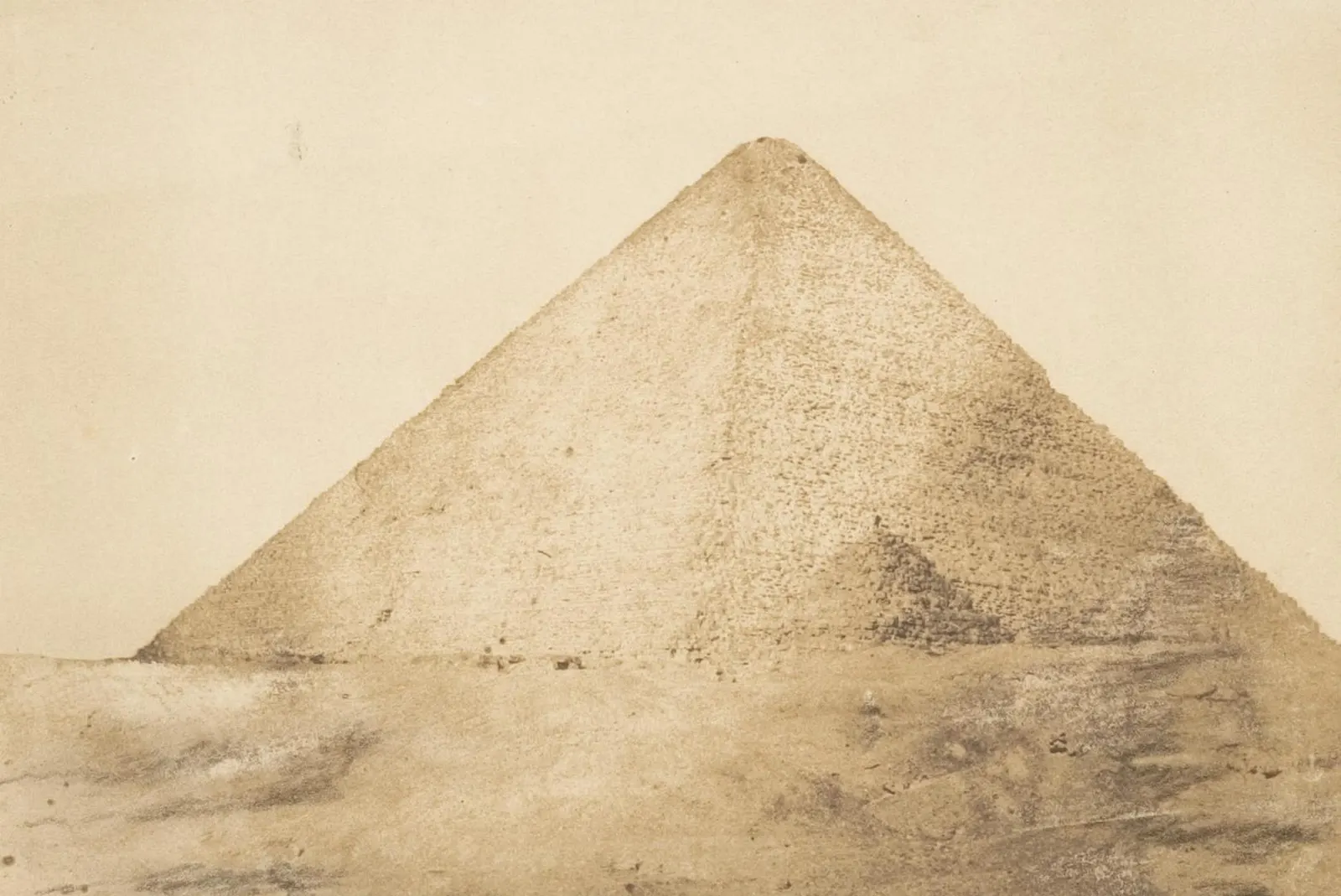
The Great Pyramid of Khufu, photographed by Maxime Du Camp in December 1849. Photo: Maxime Du Camp, The Met, CC0, via The Met Open Access.
The questionWho actually built the pyramids at Giza?
For a long time, the pyramids were studied and the people who built them were guessed at. Then, in 1988, archaeologists began digging a town just south of the Sphinx: the base the kings built for the work.
Fits: Primary (KS2). See Courses.
The story
Three kings of the 4th Dynasty built the three great pyramids at Giza: Khufu, Khafre and Menkaure. The Metropolitan Museum dates Khufu’s reign to about 2551 to 2528 BC and Menkaure’s to about 2490 to 2472 BC.1,2 Other experts give dates a few decades different. Nobody can be exact so long ago.
A town under the sand
In December 1988, a team now called Ancient Egypt Research Associates began digging a site 400 metres south of the Sphinx. Its local name is Heit el-Ghurab. It turned out to be a planned town of more than 7 hectares, built by the crown as a base for the pyramid projects of Menkaure, Khafre and probably Khufu.3
Its streets were lined with craft workshops, yards, bakeries, kitchens and warehouses. Huge royal silos held the grain that was made into bread and beer for the workforce. There were long galleries, divided by massive walls. The people here were labourers, craftsmen, managers and officials.3
When Menkaure’s pyramid was finished, the town was shut down. Its usable tools and supplies were taken away, and its timbers and mud bricks were reused somewhere else.3
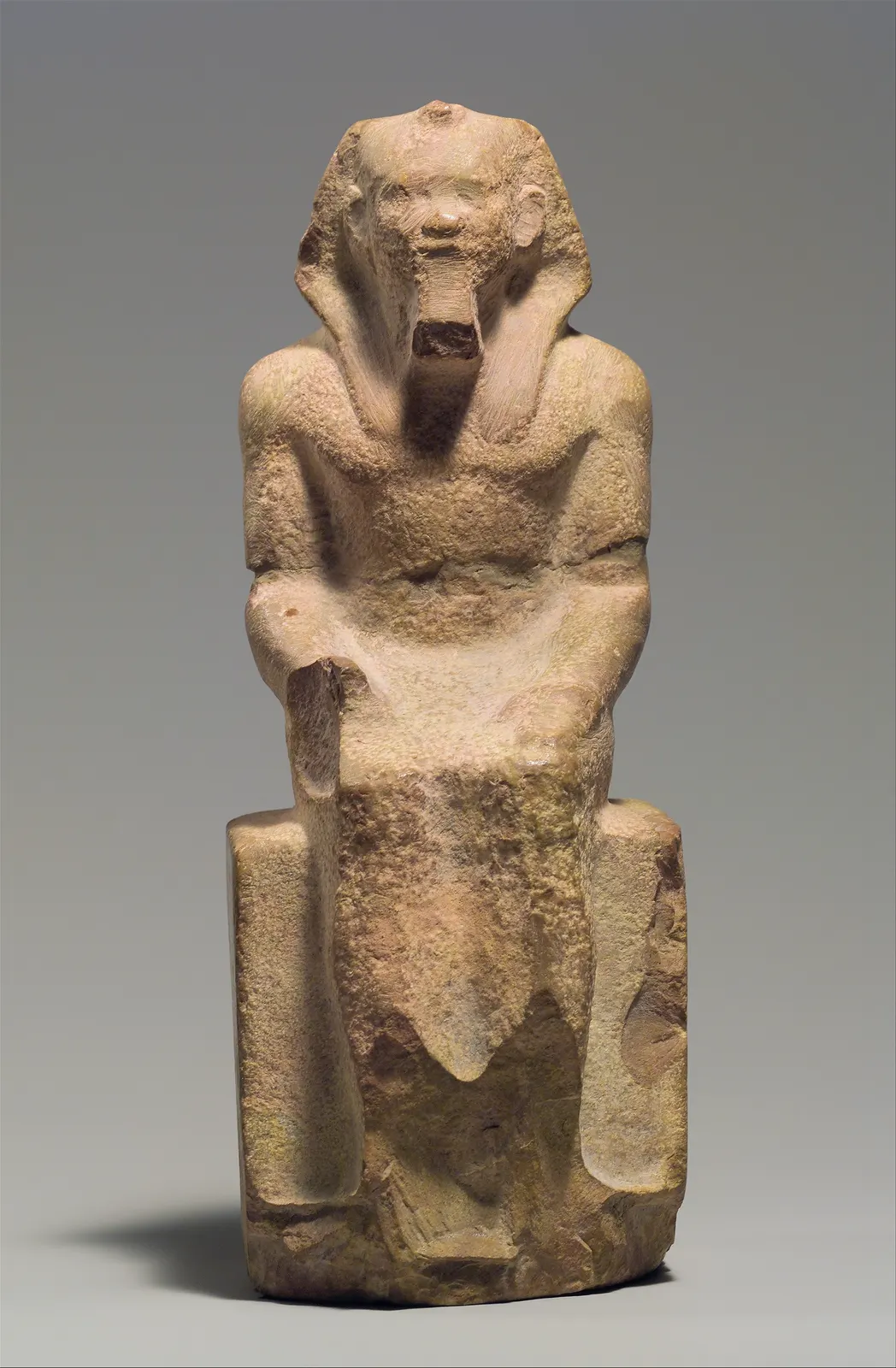
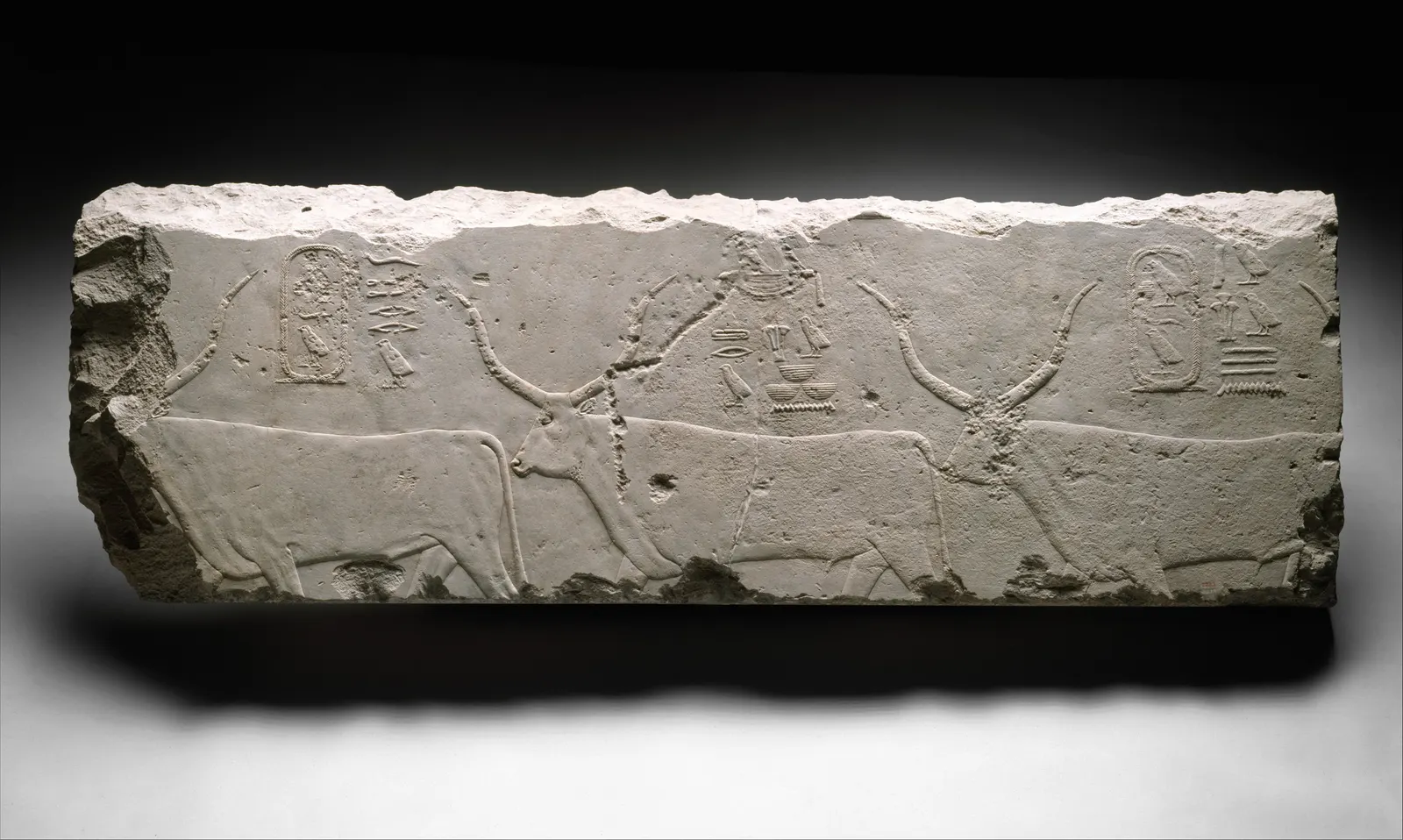
Look at the two objects above. The statue of Menkaure was found in his own temple’s sculptors’ workshop at Giza.2 The carved block of cattle was made in Khufu’s reign, but archaeologists found it at Lisht, built into the foundations of a pyramid for a much later king, Amenemhat I. It weighs about 131 kilograms.1 Even in ancient Egypt, old monuments were a quarry.
Seen by the first cameras
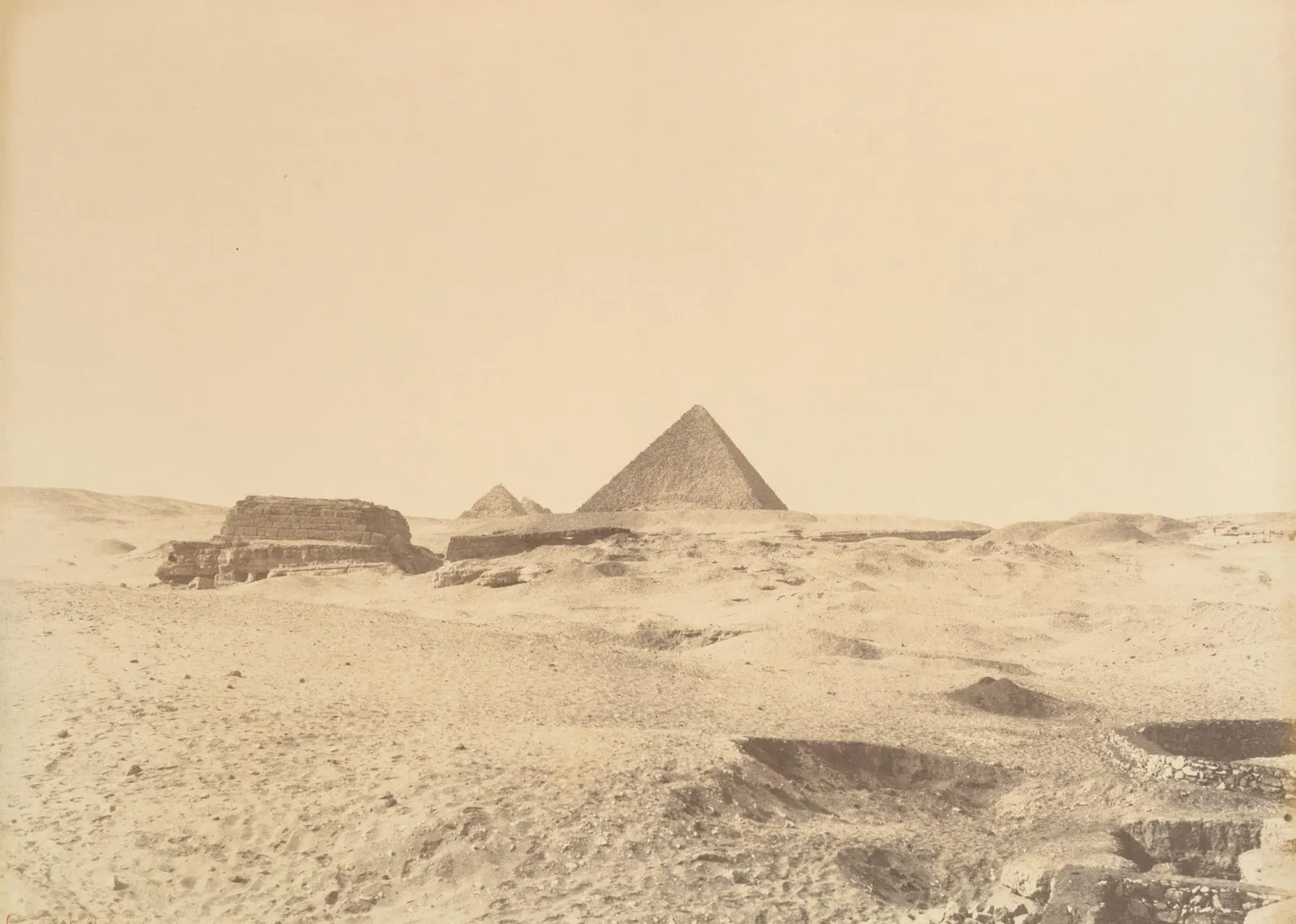
The photograph at the top of this page was taken in December 1849 by Maxime Du Camp.4 The one below, by Gustave Le Gray, dates from about 1865 to 1869.5 The pyramids were already more than 4,000 years old.
Key words
- Pyramid
- A king’s tomb with four sloping sides meeting at a point. The three great ones at Giza were built for Khufu, Khafre and Menkaure.
- Dynasty
- A family of rulers, one after another. Egyptologists number them; the Giza pyramids belong to the 4th Dynasty.
- Old Kingdom
- The name historians give to the age of the great pyramids.
- Silo
- A large store for grain.
- Reuse
- Taking stone from an old building to put in a new one. Ancient builders did it all the time.
Check yourself
Try to answer in your head, then open each one.
Where is the pyramid builders’ town?
At Giza, about 400 metres south of the Sphinx. Its modern name is Heit el-Ghurab.
Name three kinds of building found there.
Any three of: workshops, bakeries, kitchens, warehouses, royal silos, long galleries.
What happened to the town when Menkaure’s pyramid was finished?
It was shut down and demolished. Useful tools and supplies were taken away, and its timber and mud bricks were reused.
How do we know roughly when Khufu reigned?
From the evidence of his reign, worked out by Egyptologists. The Met dates it to about 2551 to 2528 BC; other experts give slightly different dates.
Go deeper
- The gift of the river where the grain came from
- The timeline Giza against the rest of the world
Sources for this page
Every number on this page comes from one of these. How we check.
Last reviewed 12 November 2026. Spotted a mistake? Tell us.
- The Metropolitan Museum of Art. Relief fragment with king Khufu’s cattle. Dynasty 4, reign of Khufu, ca. 2551–2528 BC. Collection record 543890, Open Access (CC0). www.metmuseum.org/art/collection/search/543890Used for: The dates of Khufu’s reign, and a block from his time reused at Lisht. Checked 12 November 2026.
- The Metropolitan Museum of Art. Seated Statue of King Menkaure. Dynasty 4, ca. 2490–2472 BC. Collection record 543935, Open Access (CC0). www.metmuseum.org/art/collection/search/543935Used for: The dates of Menkaure’s reign, and a statue from the sculptors’ workshop in his valley temple at Giza. Checked 12 November 2026.
- Ancient Egypt Research Associates (AERA). The Lost City of the Pyramid Builders: Heit el-Ghurab. www.aeraweb.org/lost-city/Used for: The workers’ town south of the Sphinx: when it was dug, its size, its bakeries and its end. Checked 12 November 2026.
- The Metropolitan Museum of Art. Maxime Du Camp, Vue de la grande pyramide (Chéops) prise à l’angle S.E., December 1849. Collection record 287082, Open Access (CC0). www.metmuseum.org/art/collection/search/287082Used for: A photograph of the Great Pyramid taken in December 1849. Checked 12 November 2026.
- The Metropolitan Museum of Art. Gustave Le Gray, Pyramides de Gizèh, 1865–69. Collection record 291695, Open Access (CC0). www.metmuseum.org/art/collection/search/291695Used for: A nineteenth-century photograph of the Giza pyramids. Checked 12 November 2026.