A civilisation along one river · About 2550 BC to 196 BC, and how it was read again
Ancient Egypt
Almost everything we know about ancient Egypt was found within sight of the Nile. So this page follows the river, the way it flows: north, from Thebes to the sea.
Stop 1 of 5 · Tomb of Meketre, about 1981 to 1975 BC
Thebes (Luxor)
A Greek traveller, Herodotus, was told that the Egypt the Greeks sailed to was
“land acquired by the Egyptians, given them by the river”
Herodotus, Histories 2.51
Far upstream at Thebes, an official called Meketre was buried about 4,000 years ago. When archaeologists from the Metropolitan Museum of Art dug at his tomb in 1920, they found a hidden room full of painted wooden models of people at work: the river’s gift, turned into food.2
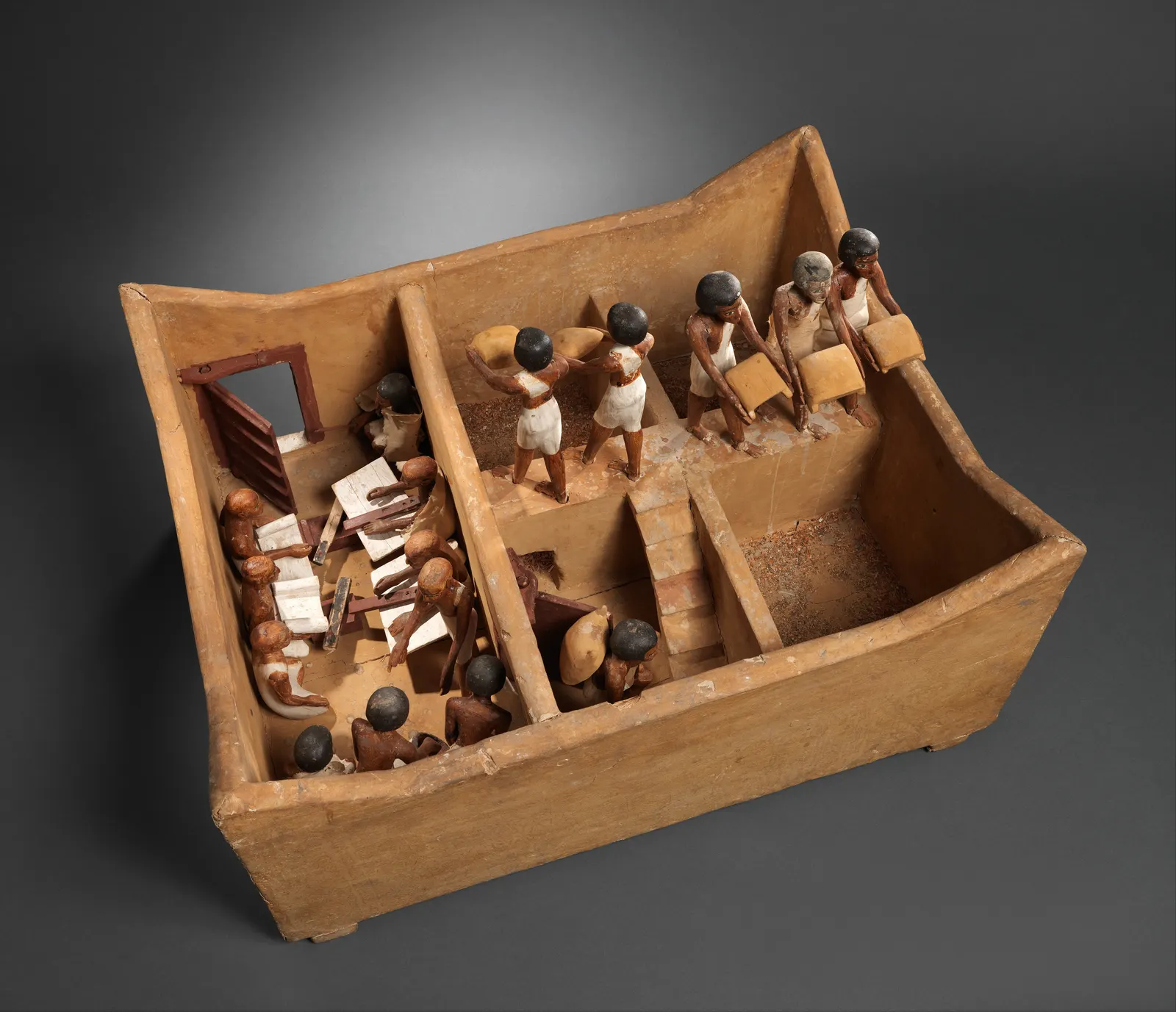
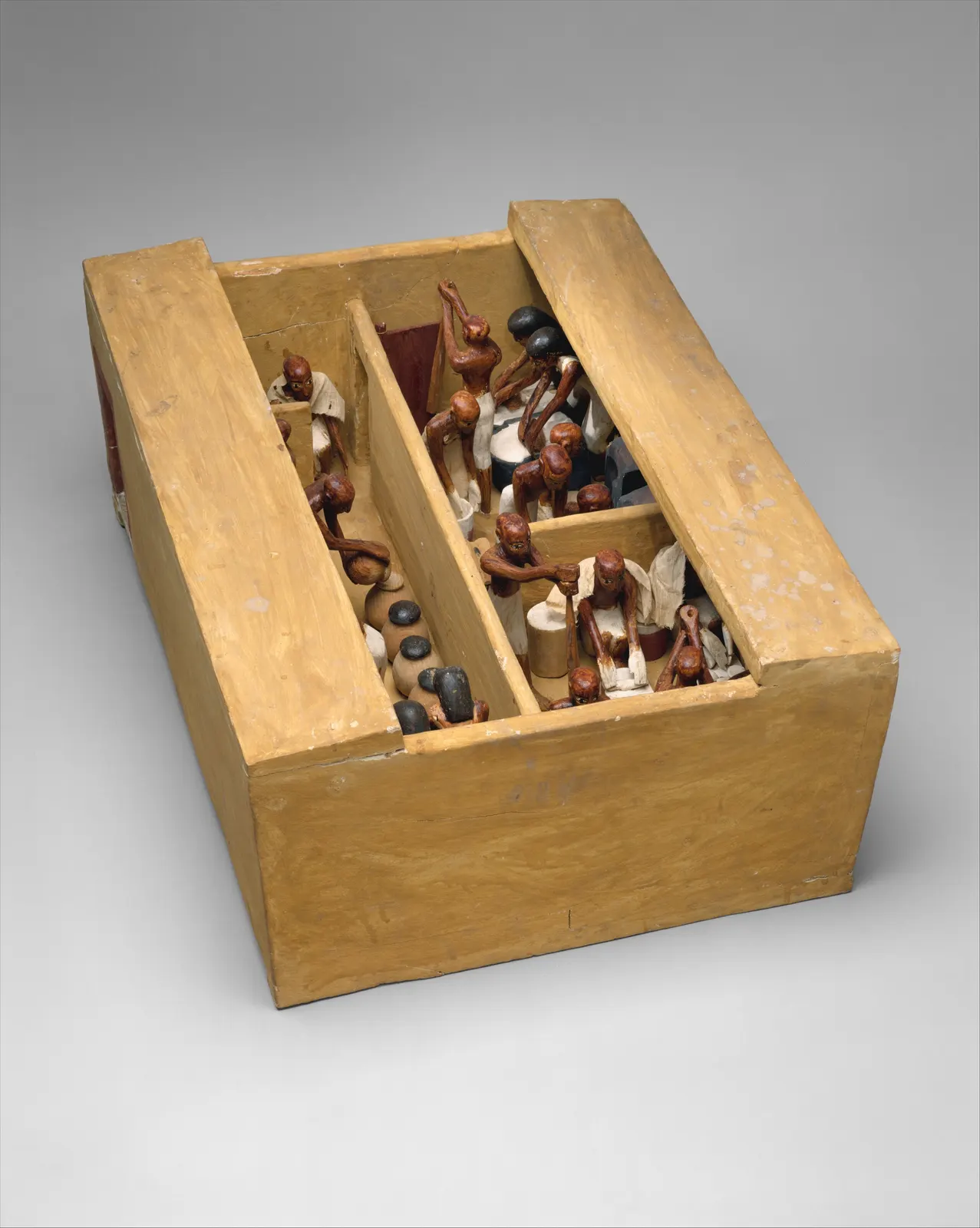
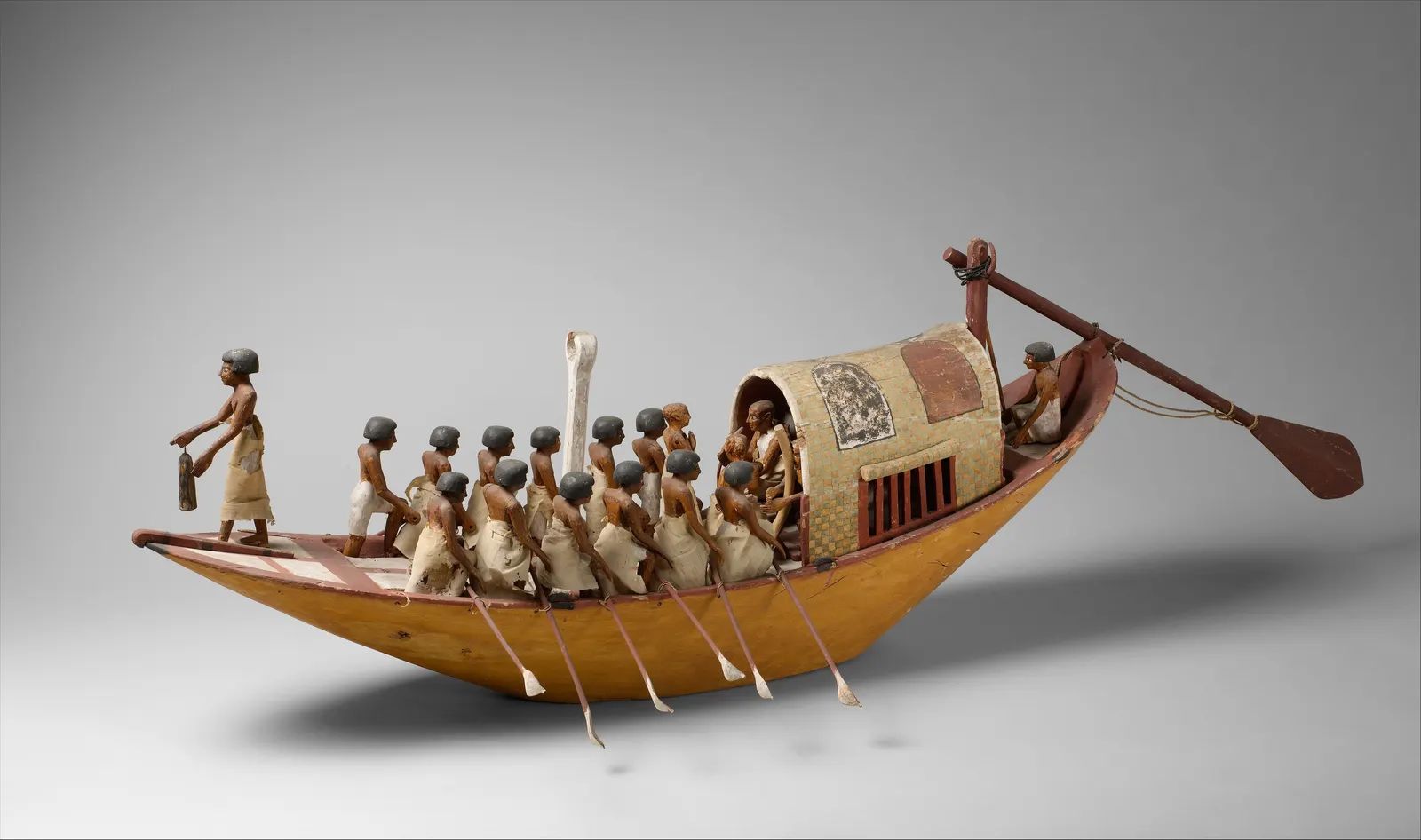
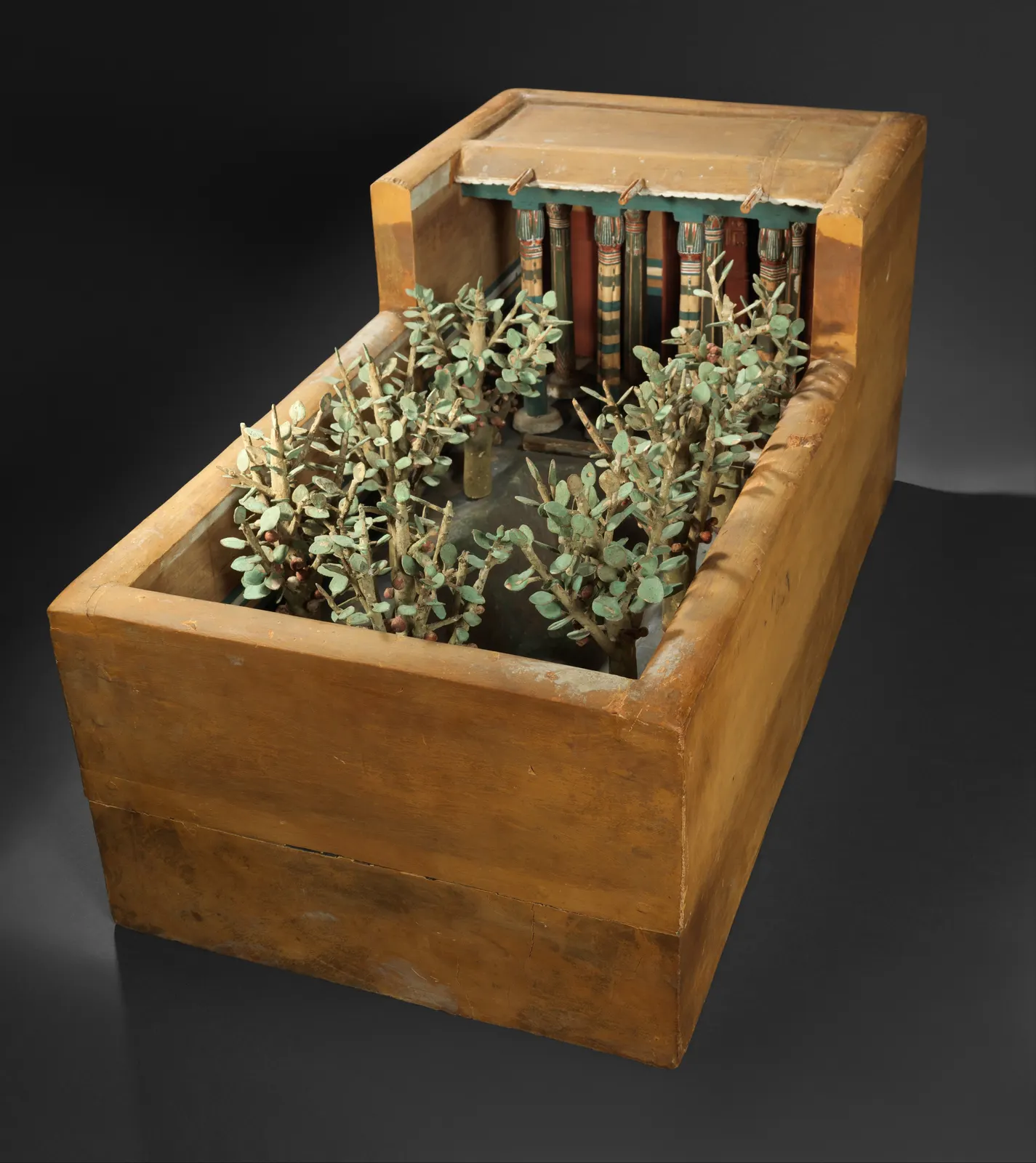
All from Meketre’s tomb, about 1981 to 1975 BC.2,3,4,5
Chapter at this stopThe gift of the riverWhy did everything in Egypt depend on the Nile?Stop 2 of 5 · About 1961 to 1878 BC
Meir
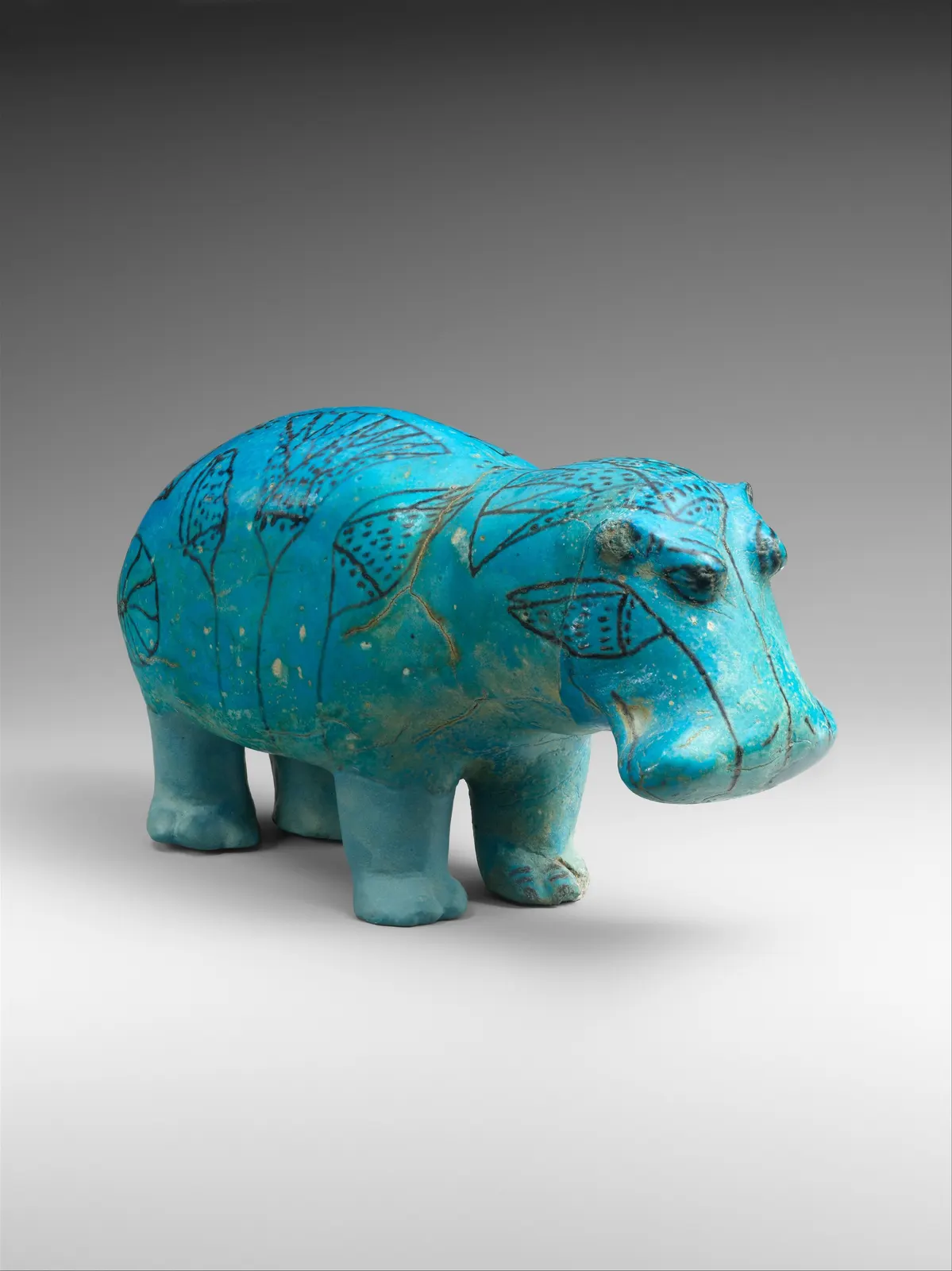
Downstream at Meir, the tomb of a steward called Senbi held this little blue hippopotamus, painted all over with plants, as if it were standing in a marsh. It was made at about the same time as Meketre’s models.6
Stop 3 of 5 · Pyramid of Amenemhat I, about 1981 BC onwards
Lisht
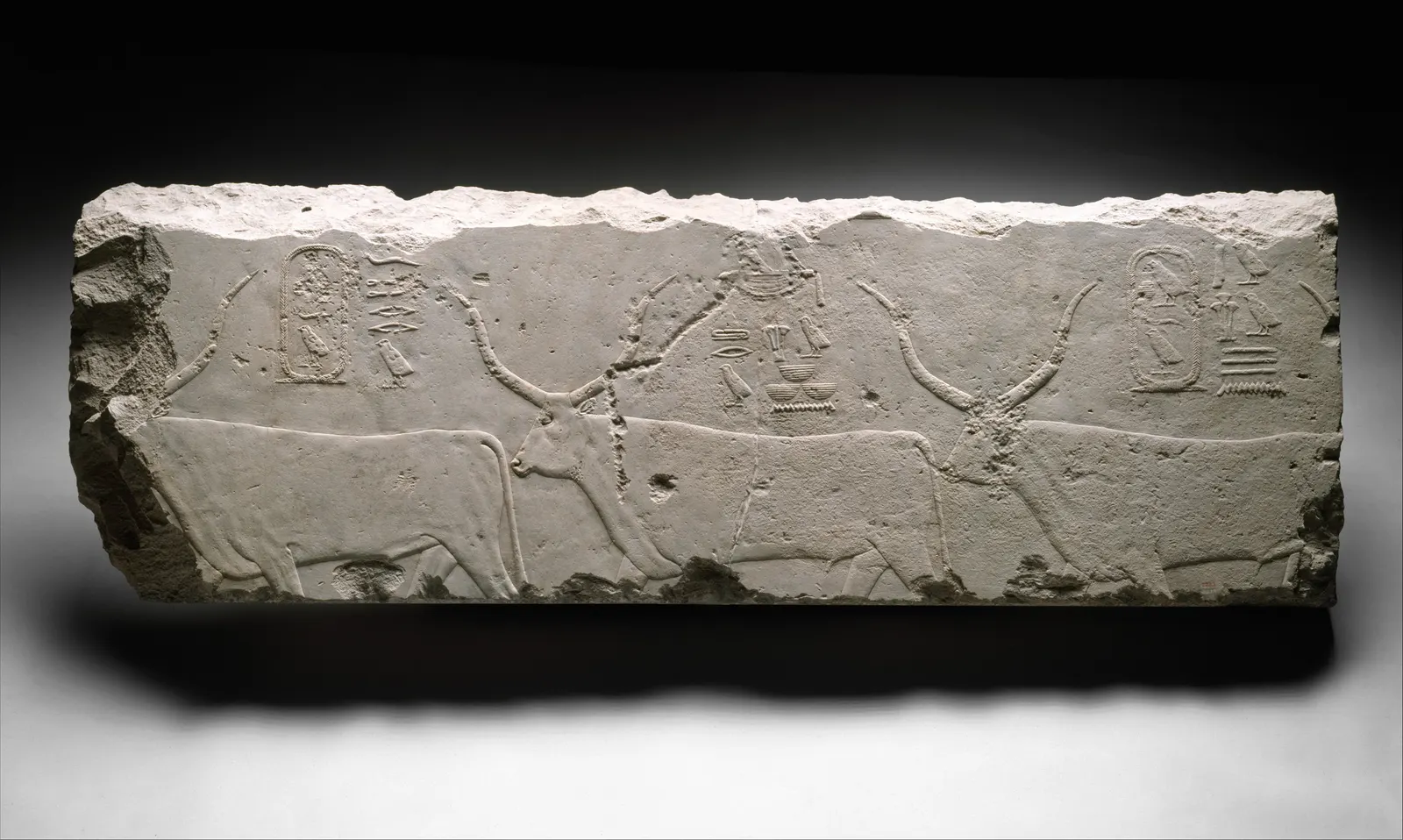
At Lisht, archaeologists found this block of carved cattle built into the foundations of a pyramid. It had been carved in the reign of Khufu, more than five centuries before.7 Egyptians were already living among ruins far older than themselves.
Stop 4 of 5 · Pyramids of Khufu to Menkaure, about 2551 to 2472 BC
Giza
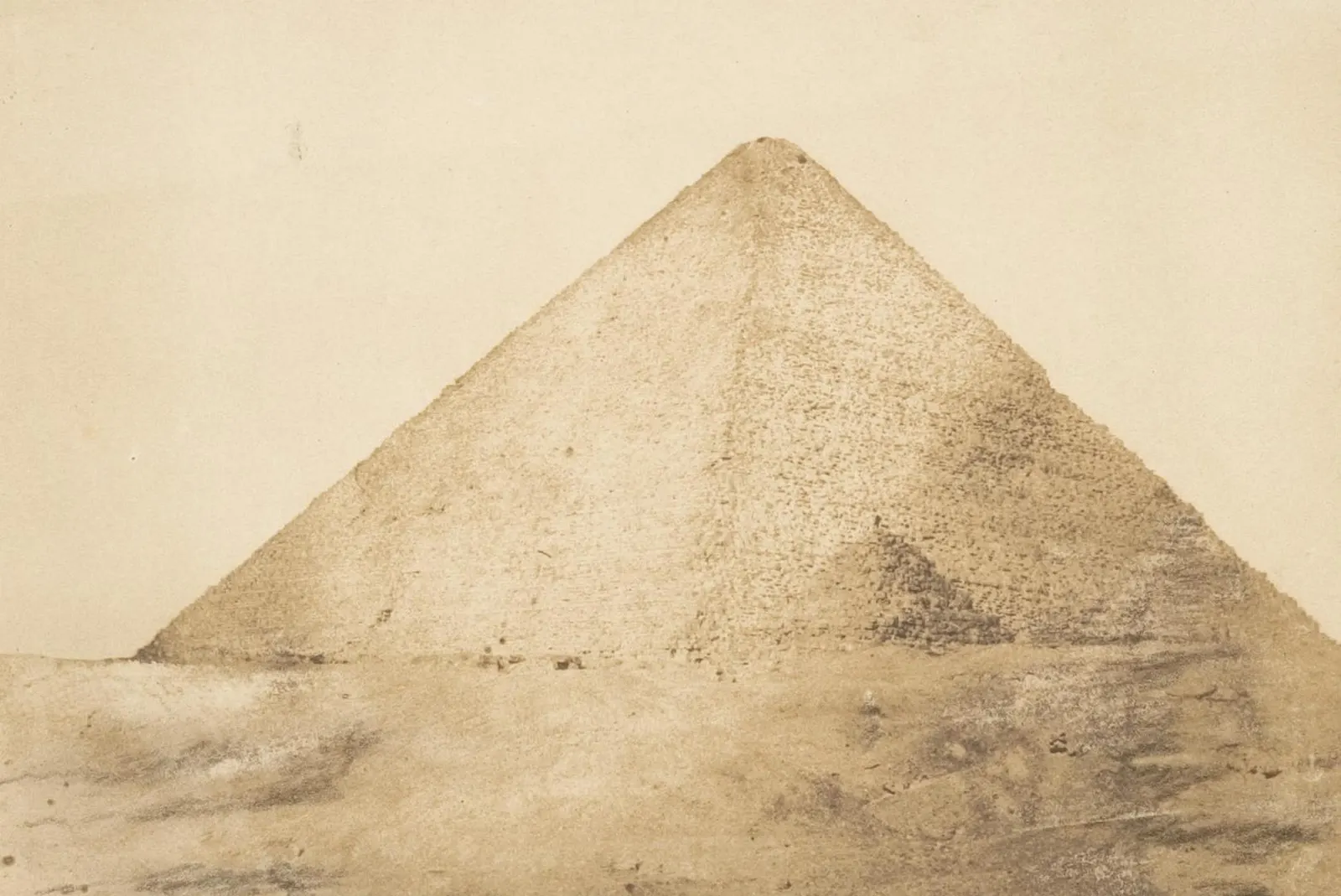
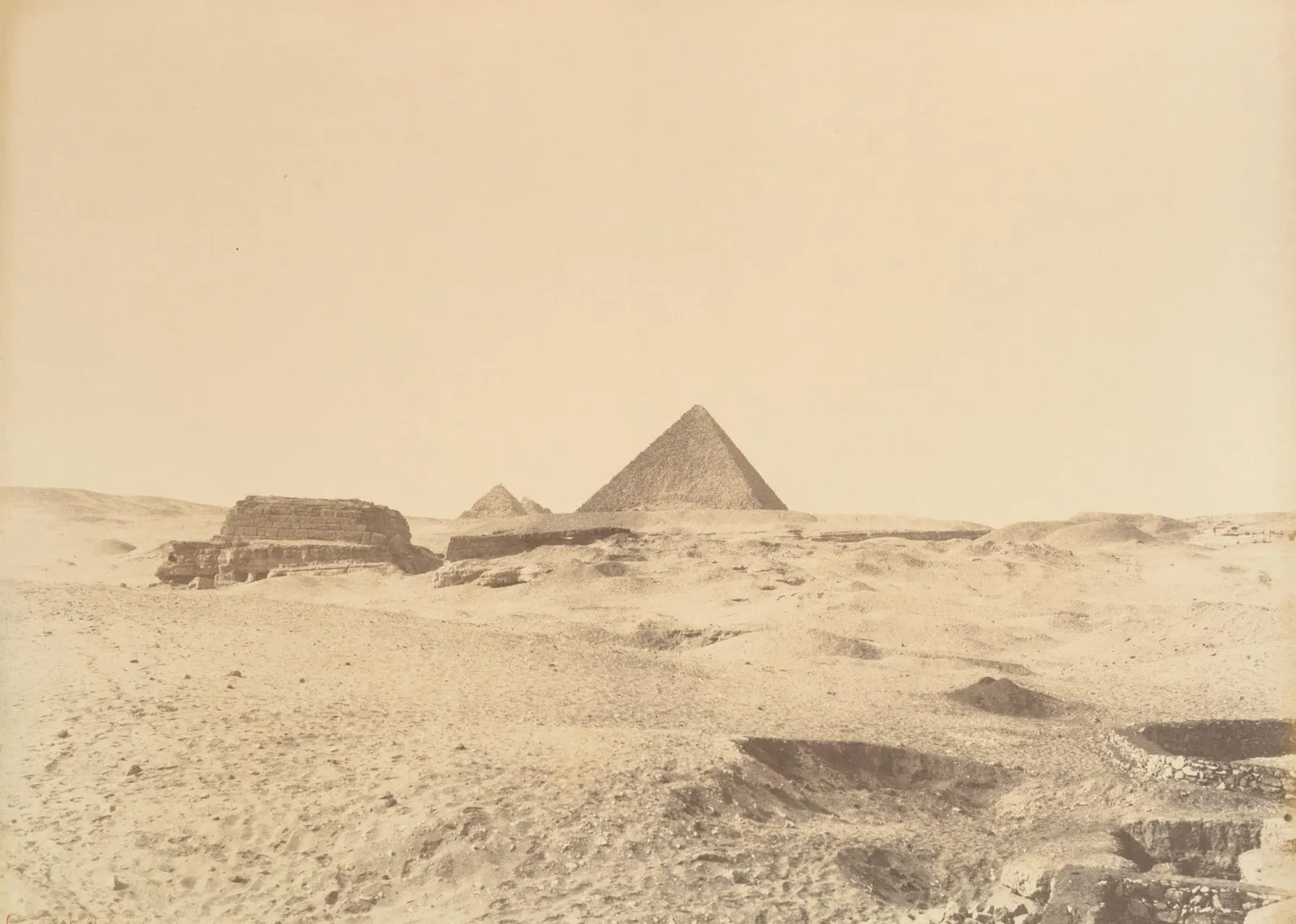
Khufu reigned from about 2551 to 2528 BC, by the Met’s dates, and the Great Pyramid is his.7 About 400 metres south of the Sphinx lies a planned town of more than 7 hectares, built by the crown as a base for the pyramid projects, with bakeries, workshops and huge royal silos for the grain.9 The river’s harvest, again, is what made the work possible.
Chapter at this stopThe town that built the pyramidsWho actually built the pyramids at Giza?Stop 5 of 5 · Decree of 196 BC; found nearby in July 1799
Rashid (Rosetta)
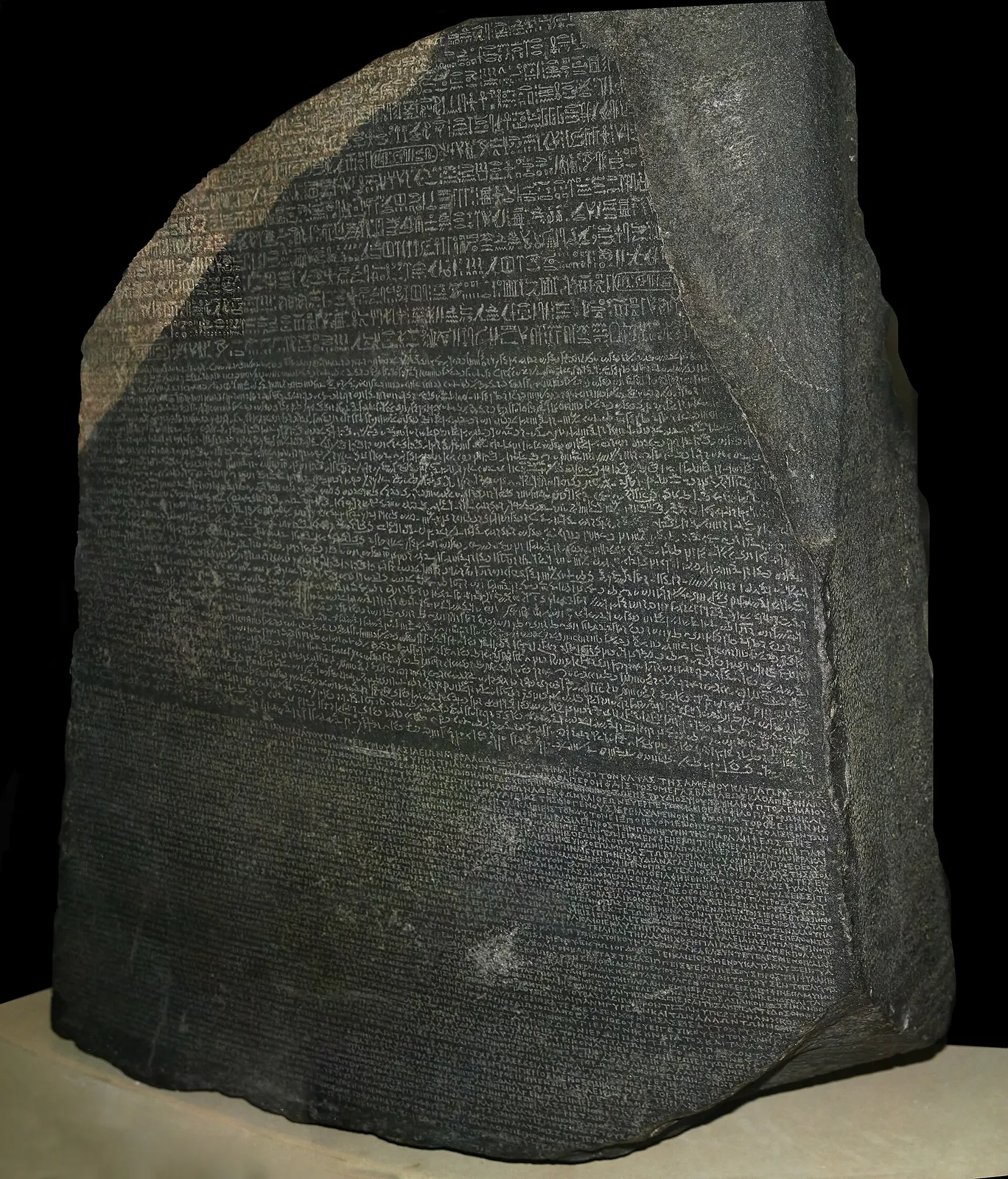

Near the sea, by the town of Rashid, which Europeans called Rosetta, a broken stone was found built into a fort wall in July 1799. It carried one priests’ decree of 196 BC in three scripts: hieroglyphs, Demotic and Greek.11 No one had read hieroglyphs since the last known inscription was carved, around AD 400. With the Greek as a key, Champollion announced on 27 September 1822 that he could read them.11
This is where the river meets the sea, and where the story of reading Egypt again begins.
Chapter at this stopReading the Rosetta StoneHow did anyone learn to read hieroglyphs again?How long is “ancient Egypt”?
Just the stretch on this page, from Khufu to the Rosetta decree, is more than six times as long as Roman Britain. Every bar is drawn to the same scale.
Every lesson is written for anyone. Choose a course and the lessons that match it are marked.
National curriculum, Key Stage 2: “a depth study of one of the following: Ancient Sumer; The Indus Valley; Ancient Egypt; The Shang Dynasty of Ancient China”
If your school chose Ancient Egypt, all three chapters fit. Read them in order.
We are not an exam board. Check the details against your own course.
We have not matched this subject to a GCSE or A level course yet. Read it as an introduction.
We have not matched this subject to a GCSE or A level course yet. Read it as an introduction.
Where experts disagree: who built the pyramids?
Forced labour, said Herodotus.Visiting Egypt about 2,000 years after the Great Pyramid, Herodotus wrote that Khufu “compelled all the Egyptians to work for him”, in “gangs of a hundred thousand men, each gang for three months”.8
An organised, fed workforce, says the ground.The town dug south of the Sphinx housed labourers, craftsmen, managers and officials, fed from royal silos and bakeries. It shows the workers were looked after; it cannot show how free they were. See the town.9
Sources for this page
Every number on this page comes from one of these. How we check.
Last reviewed 12 November 2026. Spotted a mistake? Tell us.
- Herodotus, The Histories, Book 2, sections 5 and 14. Translated by A. D. Godley (Loeb Classical Library, 1920), on LacusCurtius. penelope.uchicago.edu/Thayer/E/Roman/Texts/Herodotus/2A*.htmlUsed for: Egypt as land “given them by the river”, and farmers waiting for the flood. Checked 12 November 2026.
- The Metropolitan Museum of Art. Model of a Granary with Scribes, from the tomb of Meketre, Thebes. Dynasty 12, reign of Amenemhat I, ca. 1981–1975 BC. Collection record 545281, Open Access (CC0). www.metmuseum.org/art/collection/search/545281Used for: Meketre’s models: their date and where they were found. Checked 12 November 2026.
- The Metropolitan Museum of Art. Model Bakery and Brewery from the Tomb of Meketre. Dynasty 12, ca. 1981–1975 BC. Collection record 544258, Open Access (CC0). www.metmuseum.org/art/collection/search/544258Used for: Making bread and beer, as modelled for Meketre’s tomb. Checked 12 November 2026.
- The Metropolitan Museum of Art. Travelling Boat being Rowed, from the tomb of Meketre. Dynasty 12, ca. 1981–1975 BC. Collection record 544214, Open Access (CC0). www.metmuseum.org/art/collection/search/544214Used for: Travel on the Nile, as modelled for Meketre’s tomb. Checked 12 November 2026.
- The Metropolitan Museum of Art. Model of a Porch and Garden, from the tomb of Meketre. Dynasty 12, ca. 1981–1975 BC. Collection record 544256, Open Access (CC0). www.metmuseum.org/art/collection/search/544256Used for: A house and garden with a pool, as modelled for Meketre’s tomb. Checked 12 November 2026.
- The Metropolitan Museum of Art. Hippopotamus (“William”), from the tomb of Senbi II at Meir. Dynasty 12, ca. 1961–1878 BC. Collection record 544227, Open Access (CC0). www.metmuseum.org/art/collection/search/544227Used for: The faience hippopotamus and where it was found. Checked 12 November 2026.
- The Metropolitan Museum of Art. Relief fragment with king Khufu’s cattle. Dynasty 4, reign of Khufu, ca. 2551–2528 BC. Collection record 543890, Open Access (CC0). www.metmuseum.org/art/collection/search/543890Used for: The dates of Khufu’s reign, and a block from his time reused at Lisht. Checked 12 November 2026.
- Herodotus, The Histories, Book 2, section 124. Translated by A. D. Godley (Loeb Classical Library, 1920), on LacusCurtius. penelope.uchicago.edu/Thayer/E/Roman/Texts/Herodotus/2B*.htmlUsed for: Herodotus’s claim that Khufu forced all Egyptians to work for him, in gangs of 100,000. Checked 12 November 2026.
- Ancient Egypt Research Associates (AERA). The Lost City of the Pyramid Builders: Heit el-Ghurab. www.aeraweb.org/lost-city/Used for: The workers’ town south of the Sphinx: when it was dug, its size, its bakeries and its end. Checked 12 November 2026.
- The Metropolitan Museum of Art. Gustave Le Gray, Pyramides de Gizèh, 1865–69. Collection record 291695, Open Access (CC0). www.metmuseum.org/art/collection/search/291695Used for: A nineteenth-century photograph of the Giza pyramids. Checked 12 November 2026.
- Solly, M. (27 September 2022). Two Hundred Years Ago, the Rosetta Stone Unlocked the Secrets of Ancient Egypt. Smithsonian Magazine. www.smithsonianmag.com/history/rosetta-stone-hieroglyphs-champollion-decipherment-egypt-180980834/Used for: The Rosetta Stone: its decree, three scripts, finding, journey to London, and how Young and Champollion read it. Checked 12 November 2026.
- The Roman invasion of Britain, AD 43. English Heritage, Story of England: Romans. www.english-heritage.org.uk/learn/story-of-england/romans/invasion/Used for: Why Claudius invaded, the size of the army, and the debate over where it landed. Checked 12 November 2026.
- London Museum. A timeline of Roman London: Londinium from start to end. www.londonmuseum.org.uk/collections/london-stories/timeline-roman-london-londinium/Used for: Londinium: founding, population, the fires, the wall, the provinces and the end. Checked 12 November 2026.
- English Heritage. The Story of England: Early Medieval England. www.english-heritage.org.uk/learn/story-of-england/early-medieval/Used for: The span from the end of Roman rule in about 410 to 1066, Augustine in 597, Whitby in 664 and the Viking attack of 793. Checked 12 November 2026.
- Natural Earth, 1:110m and 1:50m land, public domain, via the world-atlas package by Mike Bostock (ISC licence). www.naturalearthdata.com/Used for: Every coastline drawn on this site. Checked 11 November 2026.