Chapter One
Asking the ancestors
About 1254 to 1041 BC; found again from 1899
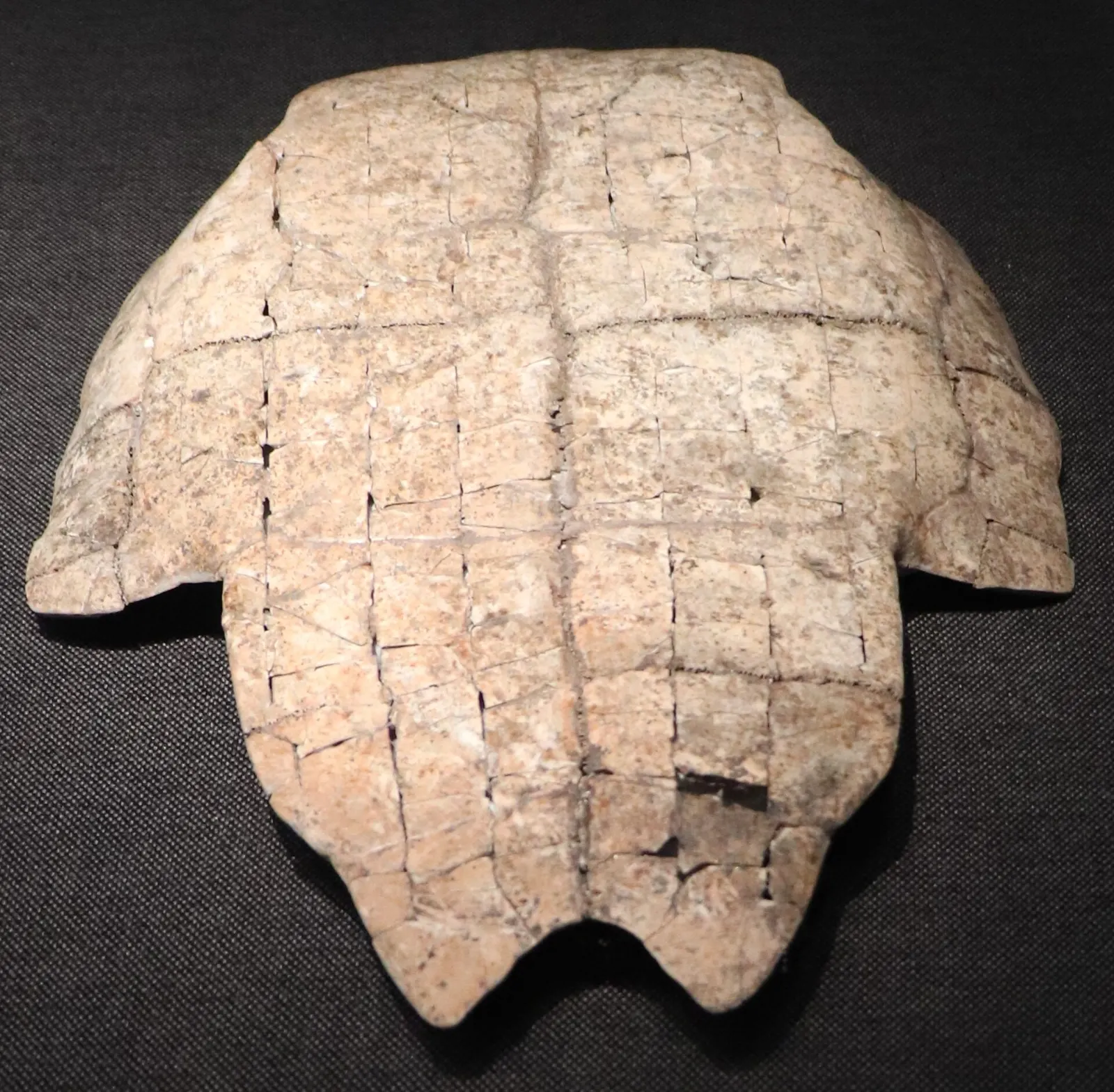
A tortoise shell used for divination at Huayuanzhuang, Anyang. Photo: Furius, CC0, via Wikimedia Commons.

The questionHow did the Shang kings ask questions of the dead, and why does it matter that they wrote the answers down?
The Shang kings did not decide important things alone. They asked their ancestors, through bone and fire, and their diviners kept a record. Those records, cut into tortoise shell and ox bone at Anyang about 3,200 years ago, are the earliest Chinese writing anyone has found.
Fits: Primary (KS2). See Courses.
The story
When the king of the Shang wanted to know whether it would rain, whether a hunt would go well, or why he had fallen ill, he did not just wait to find out. He had his diviners ask. Anything that worried the royal house could become a question: the weather, the harvest, war, illness, hunting, childbirth, and above all which offerings the ancestors wanted.2
From shell to answer
PrepareA tortoise shell is sawn from the shell’s upper half, or an ox shoulder blade is trimmed. The surface is pared and polished smooth.1
HollowRows of hollows are drilled and chiselled into the back, partway through.1
HeatA hot point is pressed into a hollow until the front of the shell cracks.2
ReadThe crack, shaped roughly like the character 卜, is read as an answer. Sometimes the king reads it himself.2
RecordThe question, and sometimes the king’s reading and what really happened, are carved beside the crack.2
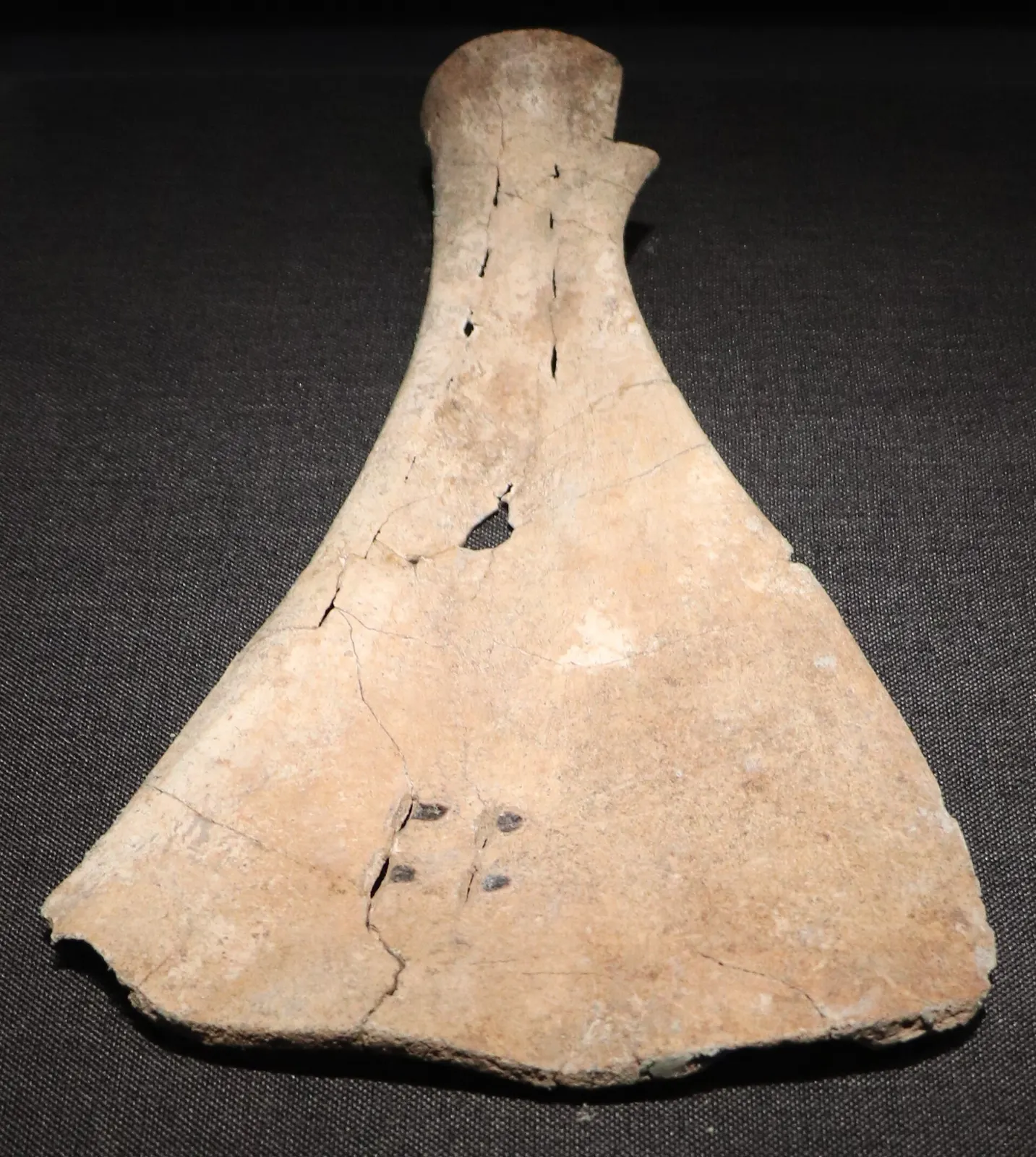

A diviner pressed a very hot point into one of the hollows cut in the back of the shell or bone until the front cracked. The crack ran in a rough 卜 shape, and its angle and branches were read as the ancestors’ answer.2 Some questions were asked again and again, once in the positive and once in the negative: “we will receive harvest”, “we may not receive harvest”.2
Writing it down
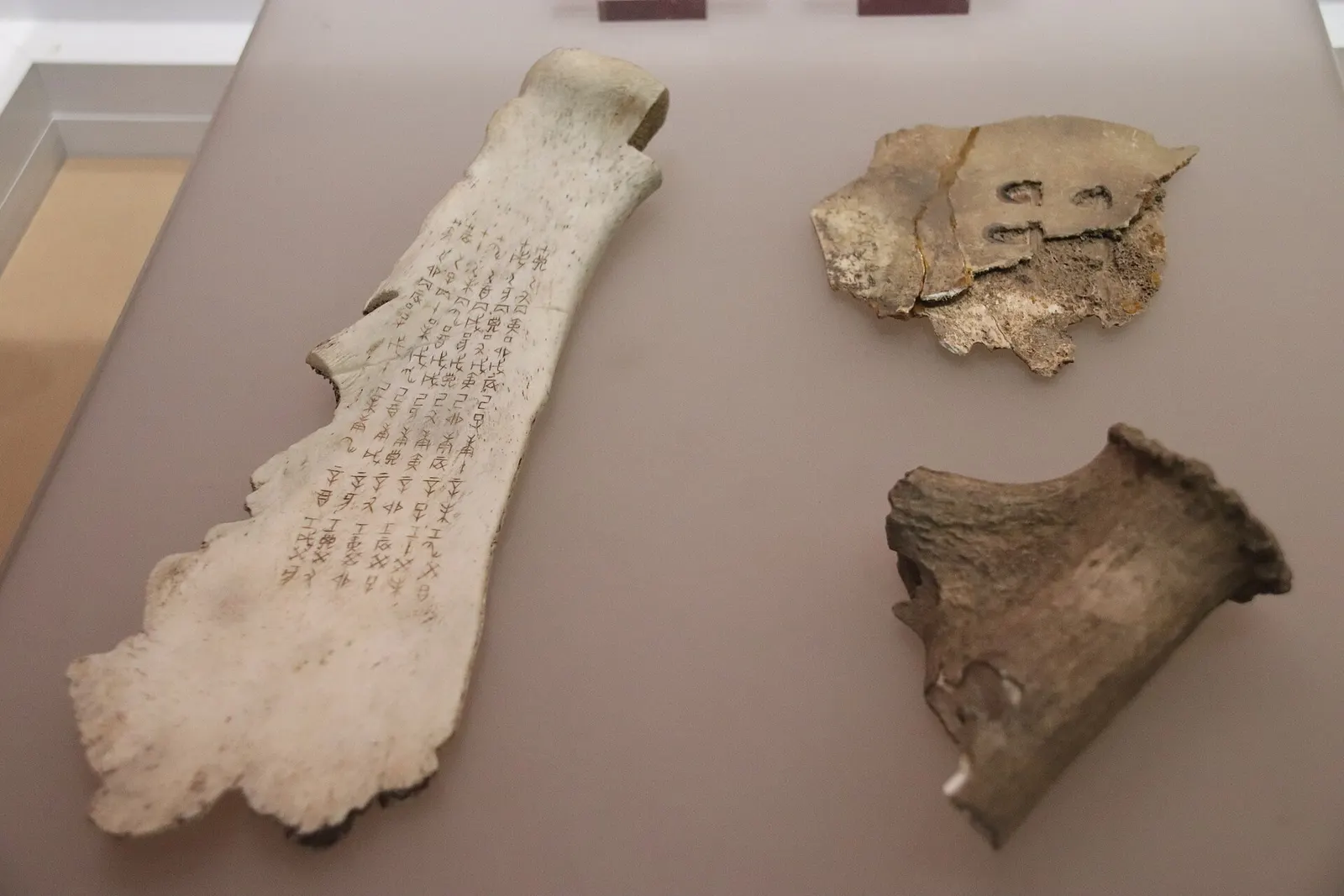
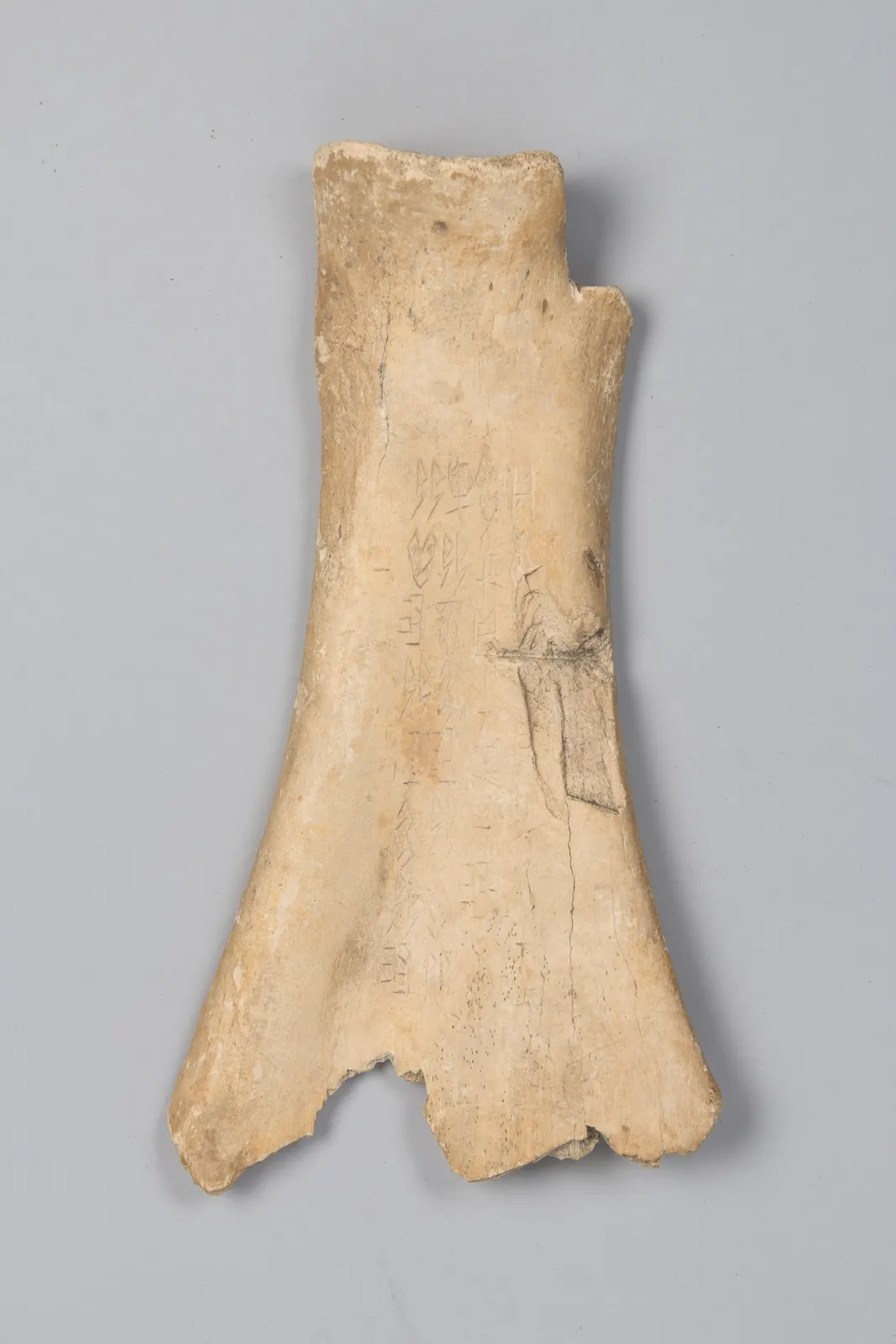
What makes the Shang bones special is what came next. The question was carved into the bone beside its crack, often with the date and the name of the diviner. Sometimes the king’s reading of the crack was added, and once in a while, later, what actually happened.2,3 These carvings are the oldest Chinese writing known. The script is the direct ancestor of Chinese characters written today.5

Medicine, or something else?
For about 3,000 years the bones lay buried. In 1899 a scholar in Beijing, Wang Yirong, recognised the marks on some pieces of bone as very old writing.3 A popular story says he was taking ground “dragon bones” as medicine for malaria and noticed the writing on his prescription. It is a good story, but it is a legend: nobody knows how the first bones actually reached Wang.3 For years the dealers who sold them claimed they came from somewhere else, keeping the real source to themselves.3
The source was Anyang. From 1928 to 1937, archaeologists from the Academia Sinica dug there properly, and found about 20,000 pieces of inscribed bone and shell.3 Altogether, well over 100,000 pieces have now been found.2
Where experts disagree: when did Wu Ding reign?
The two are not far apart, and the radiocarbon dates are the first measured from the bones directly. But they come with a margin of error, and the older reckoning is still found in many books.
Key words
- Divination
- Trying to learn what will happen, or what the spirits want, by reading signs.
- Oracle bone
- A piece of ox shoulder blade or tortoise shell cracked with heat to ask a question, often with the question carved on it.
- Plastron
- The flat underside of a tortoise’s shell.
- Charge
- The question, or statement, put to the ancestors in a divination.
- Ancestor
- A family member who has died. The Shang believed dead kings could still help or harm the living.
Check yourself
Try to answer in your head, then open each one.
What two materials were used for oracle bones?
Tortoise shell (the flat underside, the plastron) and ox shoulder blades.
Put in order: carve the record, polish, heat, drill hollows, read the crack.
Polish, drill hollows, heat, read the crack, carve the record.
Name three things the Shang kings asked about.
Any three of: weather, harvests, war, hunting, illness, childbirth, offerings to the ancestors.
Why does the 1899 “malaria medicine” story need care?
Because it is a legend: we do not actually know how the first bones reached the scholars who noticed them.
Go deeper
- Bronze for the ancestors the vessels the offerings were made in
- How writing began China among the places writing was invented
Sources for this page
Every number on this page comes from one of these. How we check.
Last reviewed 12 November 2026. Spotted a mistake? Tell us.
- Museum of the Institute of History and Philology, Academia Sinica. Exhibition: the preparation of oracle bones. museum.sinica.edu.tw/en/exhibitions/158/Used for: How shells and shoulder blades were cut, polished and drilled before they were cracked. Checked 12 November 2026.
- Keightley, D. N. (1978). Sources of Shang History: The Oracle-Bone Inscriptions of Bronze Age China. Berkeley: University of California Press. search.worldcat.org/search?q=Sources%20of%20Shang%20History%20Keightley%201978Used for: How a divination was made and recorded, what the kings asked about, and the inscription about Lady Hao’s childbirth (Heji 14002). Checked 12 November 2026.
- Xu Yahui (2002). Ancient Chinese Writing: Oracle Bone Inscriptions from the Ruins of Yin. Taipei: National Palace Museum. search.worldcat.org/search?q=Ancient%20Chinese%20Writing%20Oracle%20Bone%20Inscriptions%20from%20the%20Ruins%20of%20Yin%20Xu%20YahuiUsed for: The parts of an inscription; how the bones were first noticed in 1899 and the doubts about the story; the pit YH127. Checked 12 November 2026.
- Liu, K., Wu, X., Guo, Z., Yuan, S. and others (2021). Radiocarbon dating of oracle bones of Late Shang period in ancient China. Radiocarbon 63(1), 155–175. doi.org/10.1017/RDC.2020.90Used for: Radiocarbon dates for King Wu Ding’s reign (1254 to 1197 BC) and for the end of the Shang (about 1041 BC). Checked 12 November 2026.
- British Library, Asian and African Studies blog (2014). The Couling-Chalfant collection of oracle bones in the British Library. britishlibrary.typepad.co.uk/asian-and-african/2014/06/the-couling-chalfant-collection-of-oracle-bones-in-the-british-library.htmlUsed for: Shang oracle bones as the oldest known Chinese writing, and the ancestor of today’s characters. Checked 11 November 2026.
- The Metropolitan Museum of Art. Oracle bone. Inscribed bone. Shang dynasty, ca. 1600–1046 BCE. Collection record 60696, Open Access (CC0). www.metmuseum.org/art/collection/search/60696Used for: An inscribed oracle bone, 23.5 cm long. Checked 12 November 2026.