A civilisation read from bone and bronze · About 1250 BC to 1041 BC, at Anyang
Shang China
The Shang kings asked their dead ancestors questions by cracking bone and shell with heat, and then had the questions carved beside the cracks. Those carvings are the oldest Chinese writing we have.1,4 A Shang record of a question has four parts. So does this page.
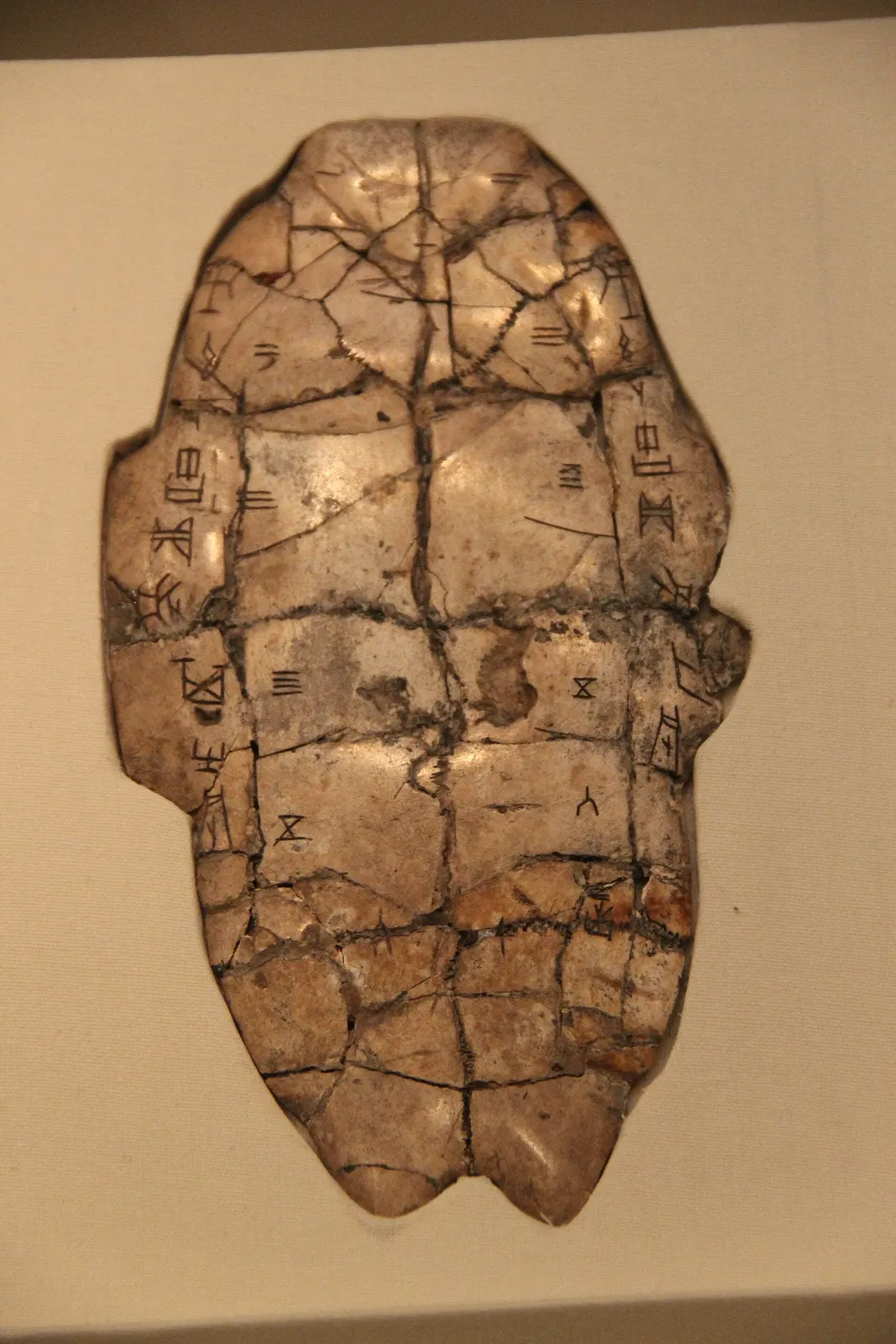
The preface: when, and who asked
Anyang, in the reign of Wu Ding
The Shang ruled part of northern China for centuries; the Met dates the dynasty to about 1600 to 1046 BC.6 This subject is about its last capital, at Anyang, where almost all the oracle bones were found.2 Radiocarbon dates from the bones themselves put King Wu Ding’s reign at about 1254 to 1197 BC, and the end of the dynasty at about 1041 BC.3
The charge: the question
One question, in four parts
Here is a real record, about the birth of a child to Lady Hao, one of Wu Ding’s consorts, in David Keightley’s translation, slightly shortened.1 Read it the way a Shang scribe set it out.
- Preface
Crack-making on jiashen day, Que divined:
- Charge
“Lady Hao’s childbearing will be good.”
- Prognostication
The king read the cracks and said: “If it be on a ding day that she gives birth, it will be good. If it be on a geng day, it will be very lucky.”
- Verification
On the thirty-first day, jiayin, she gave birth. It was not good. It was a girl.
The prognostication: reading the crack
Two ways in
Everything we know about the Shang comes down to two kinds of evidence. Follow either branch of the crack.
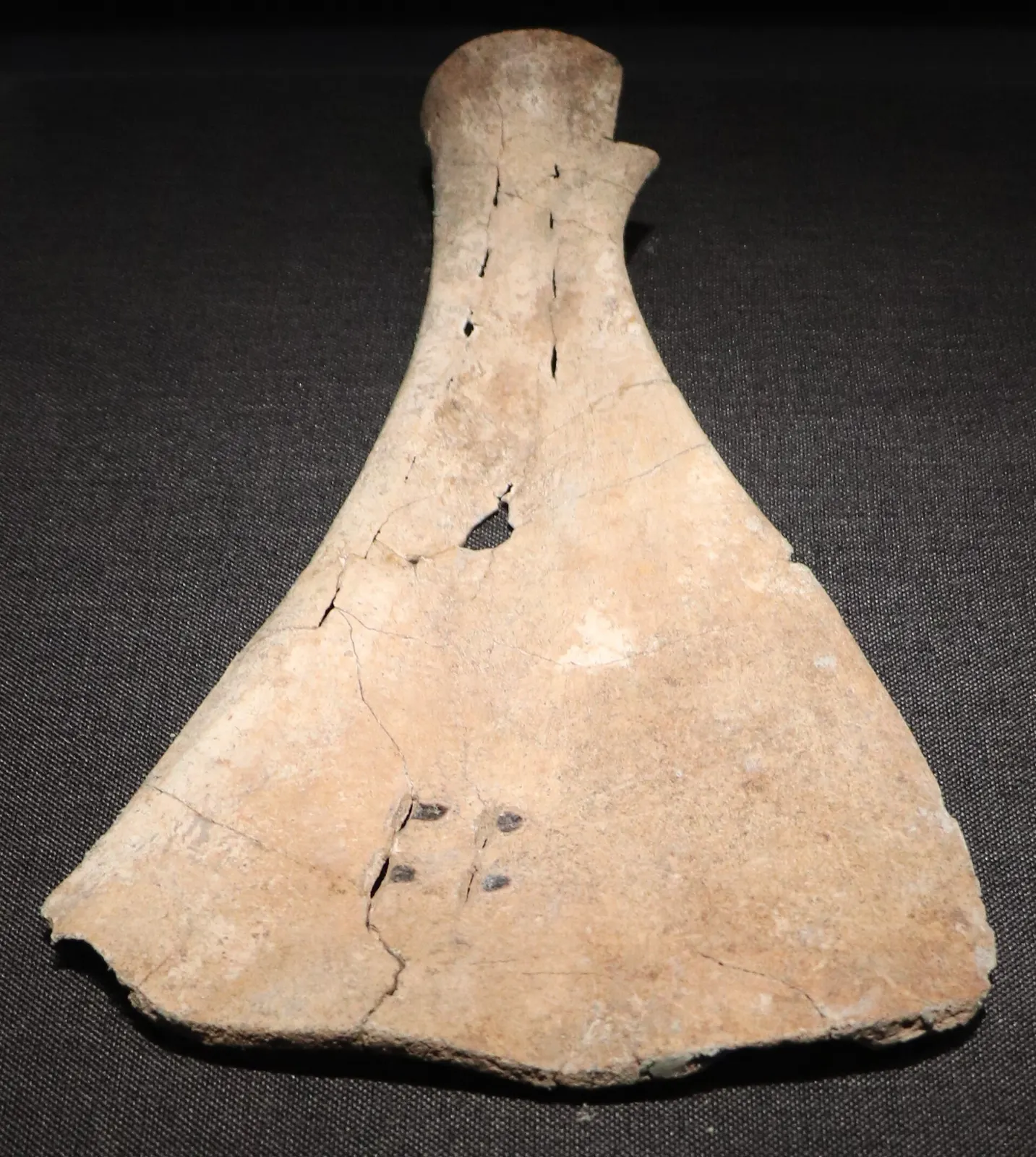 Chapter oneAsking the ancestorsHow did the Shang kings ask questions of the dead, and why does it matter that they wrote the answers down?About 1254 to 1041 BC; found again from 1899
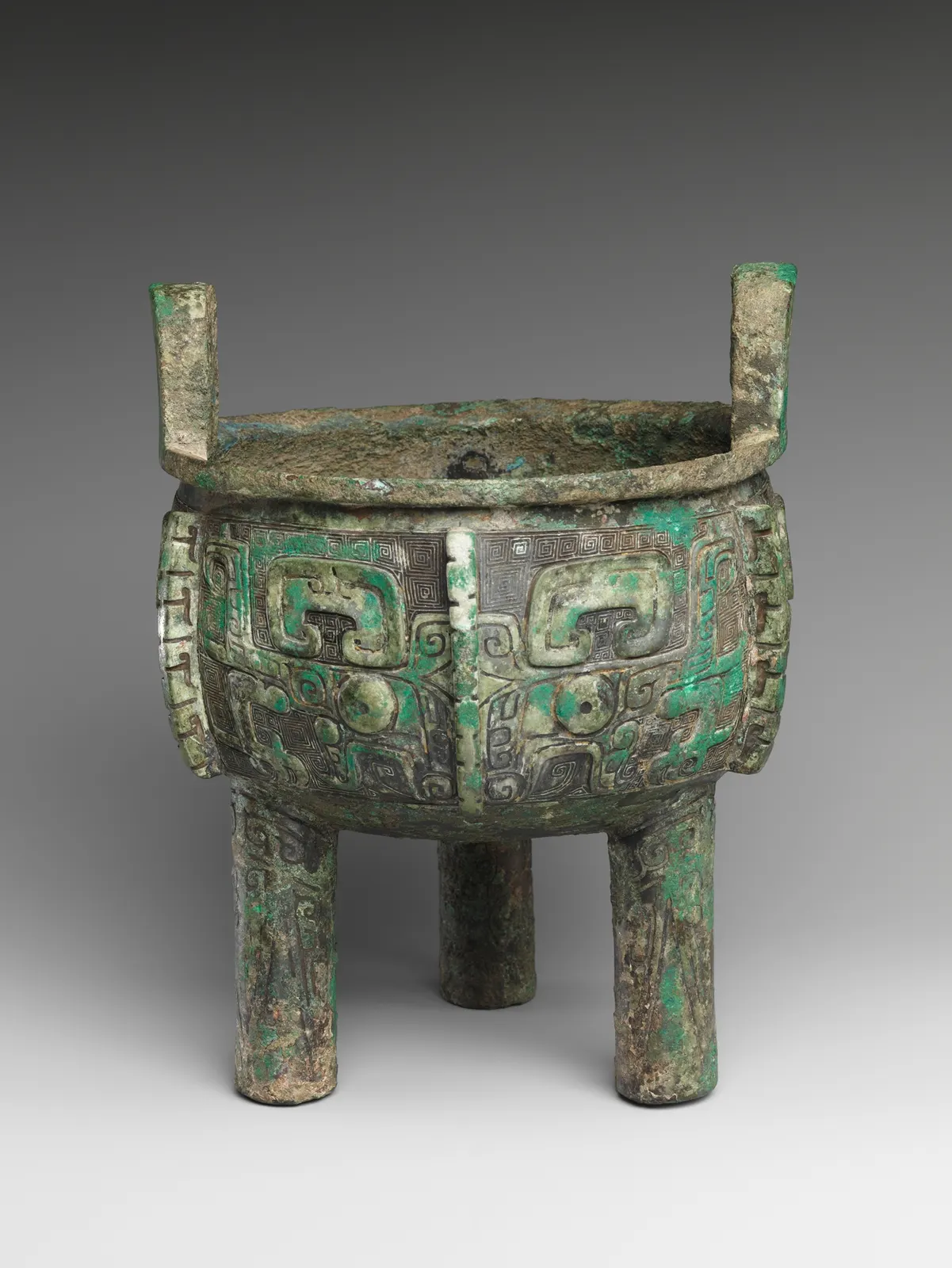
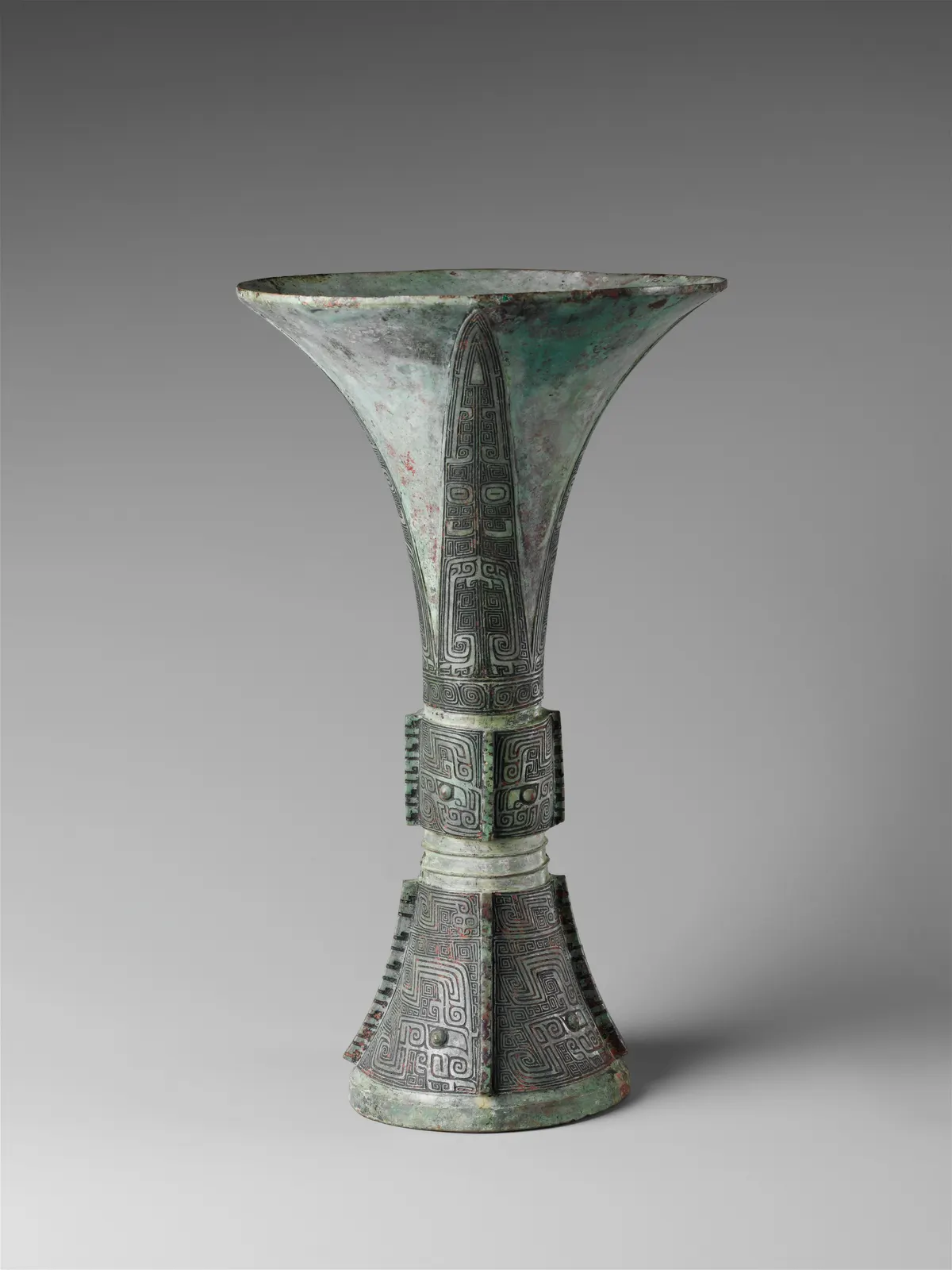
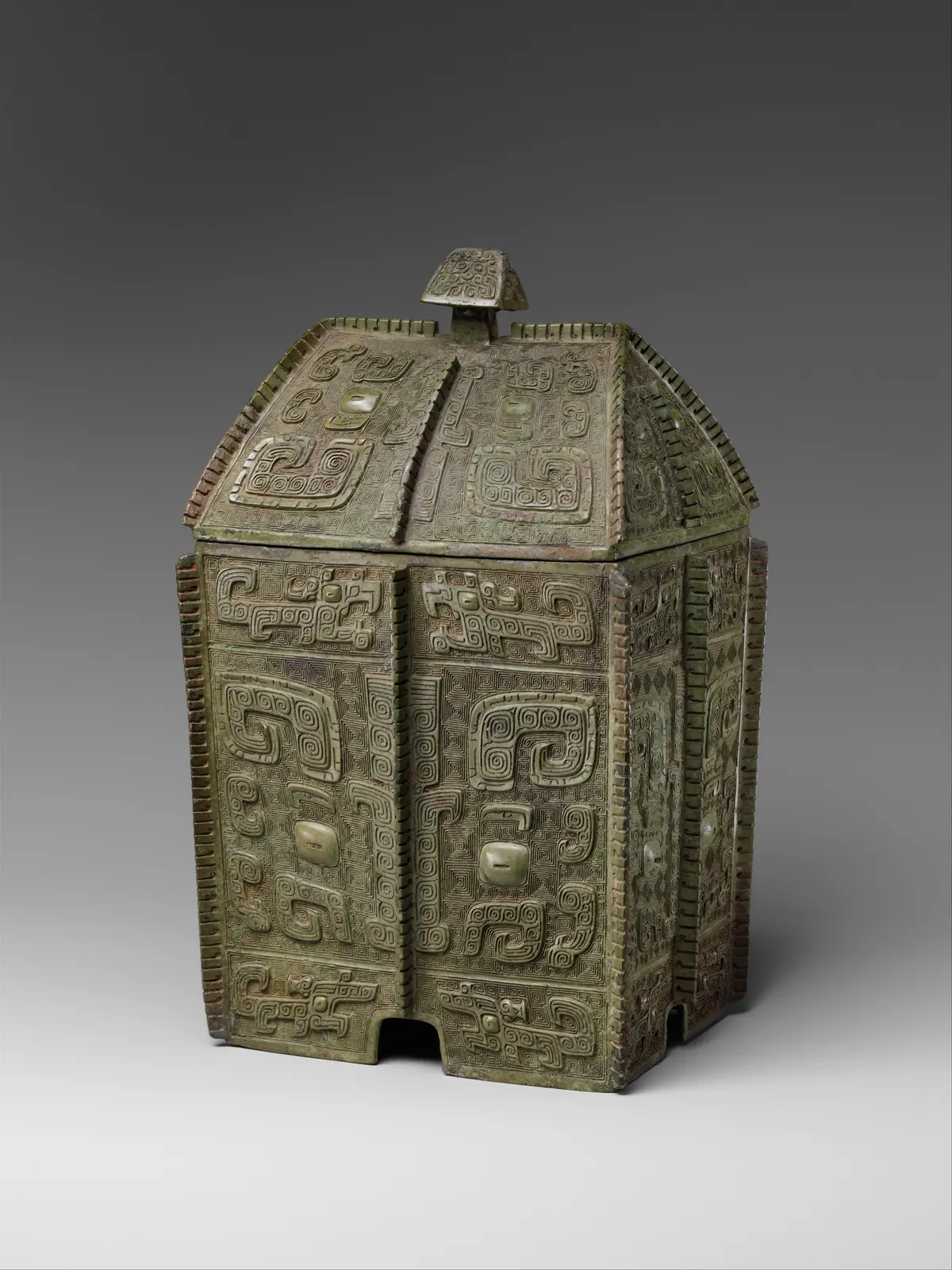
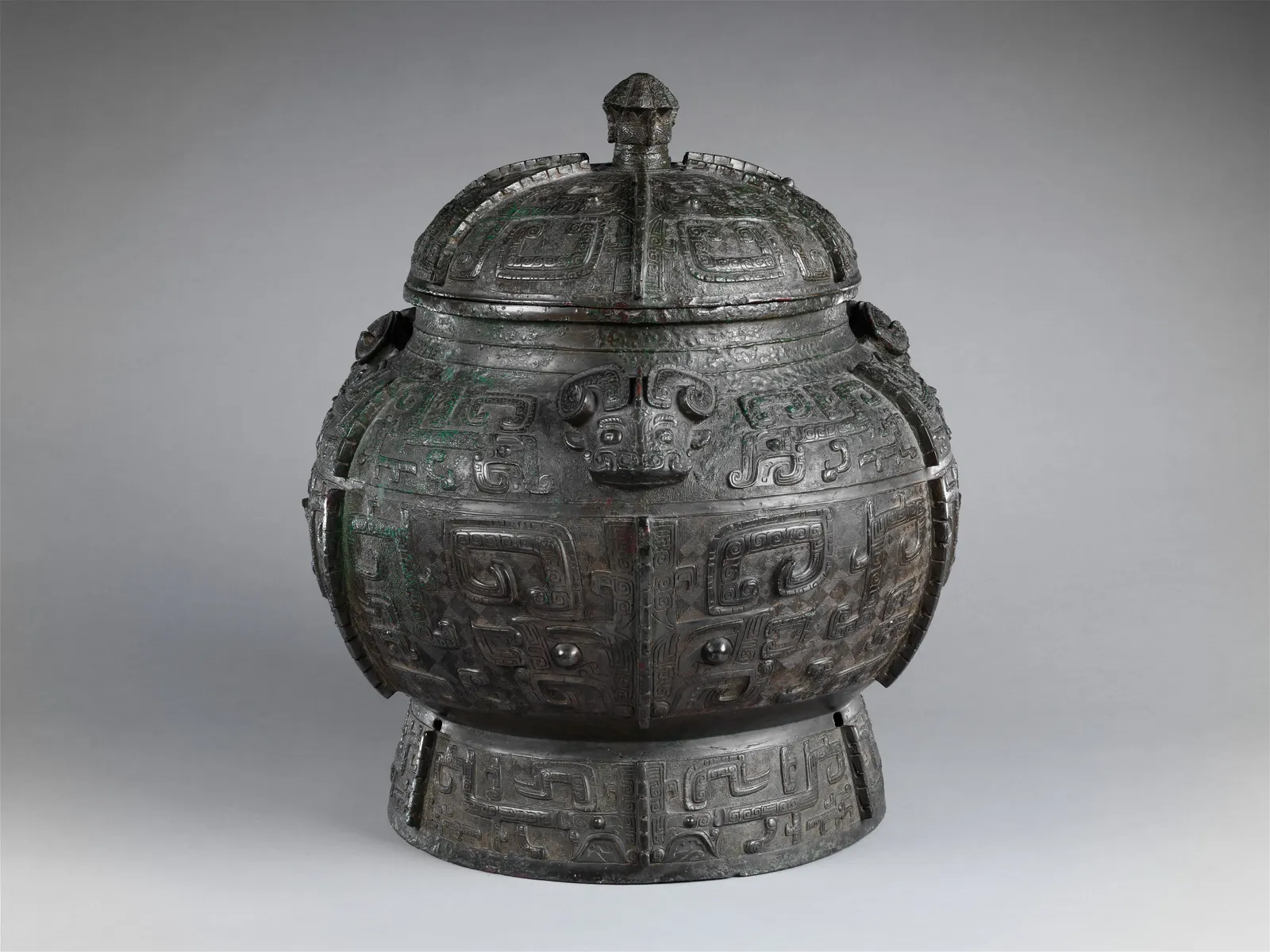
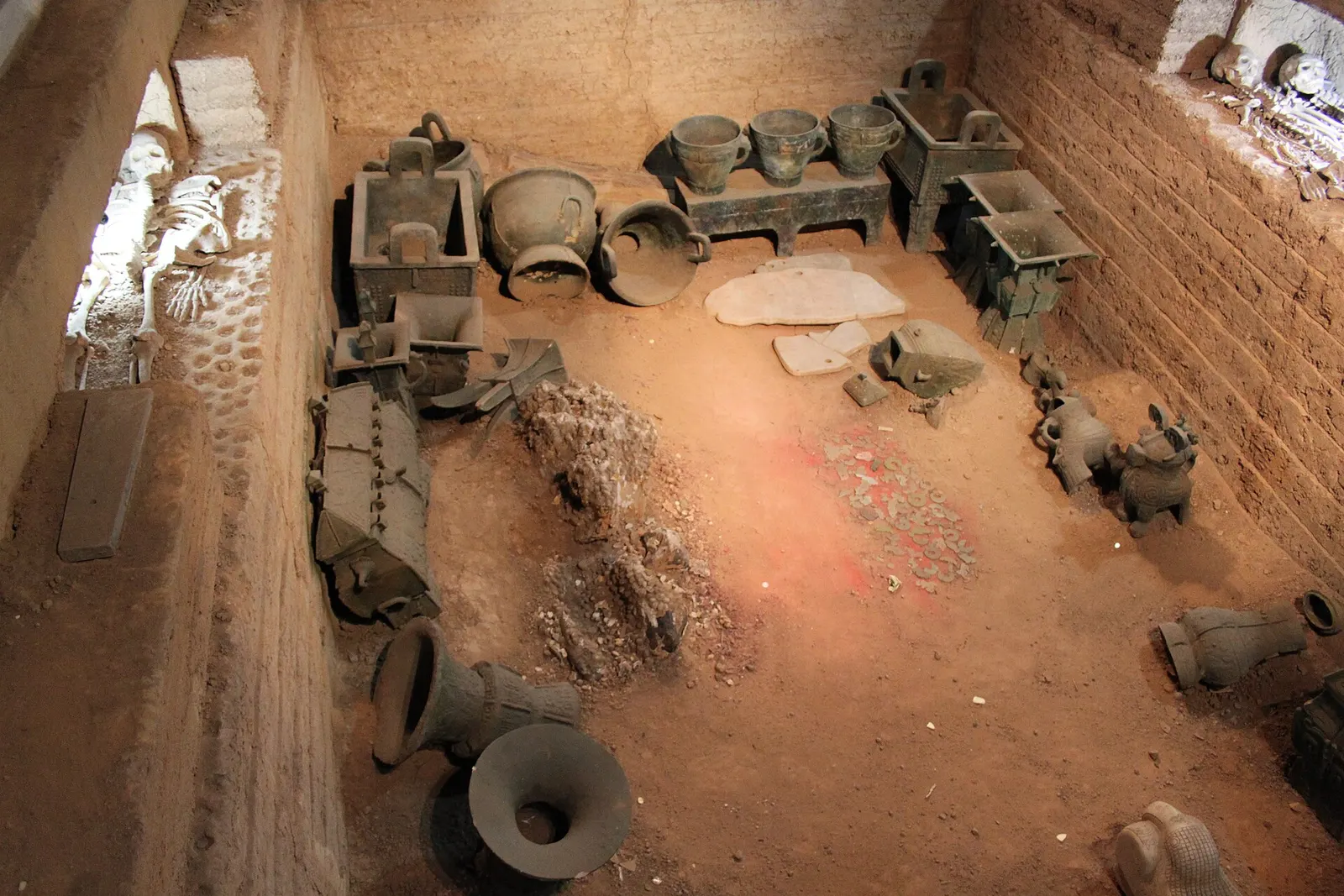 Chapter twoBronze for the ancestorsWhat were the Shang bronzes for, and what did a queen take to her grave?About 1300 to 1041 BC; Lady Hao’s tomb found 1976
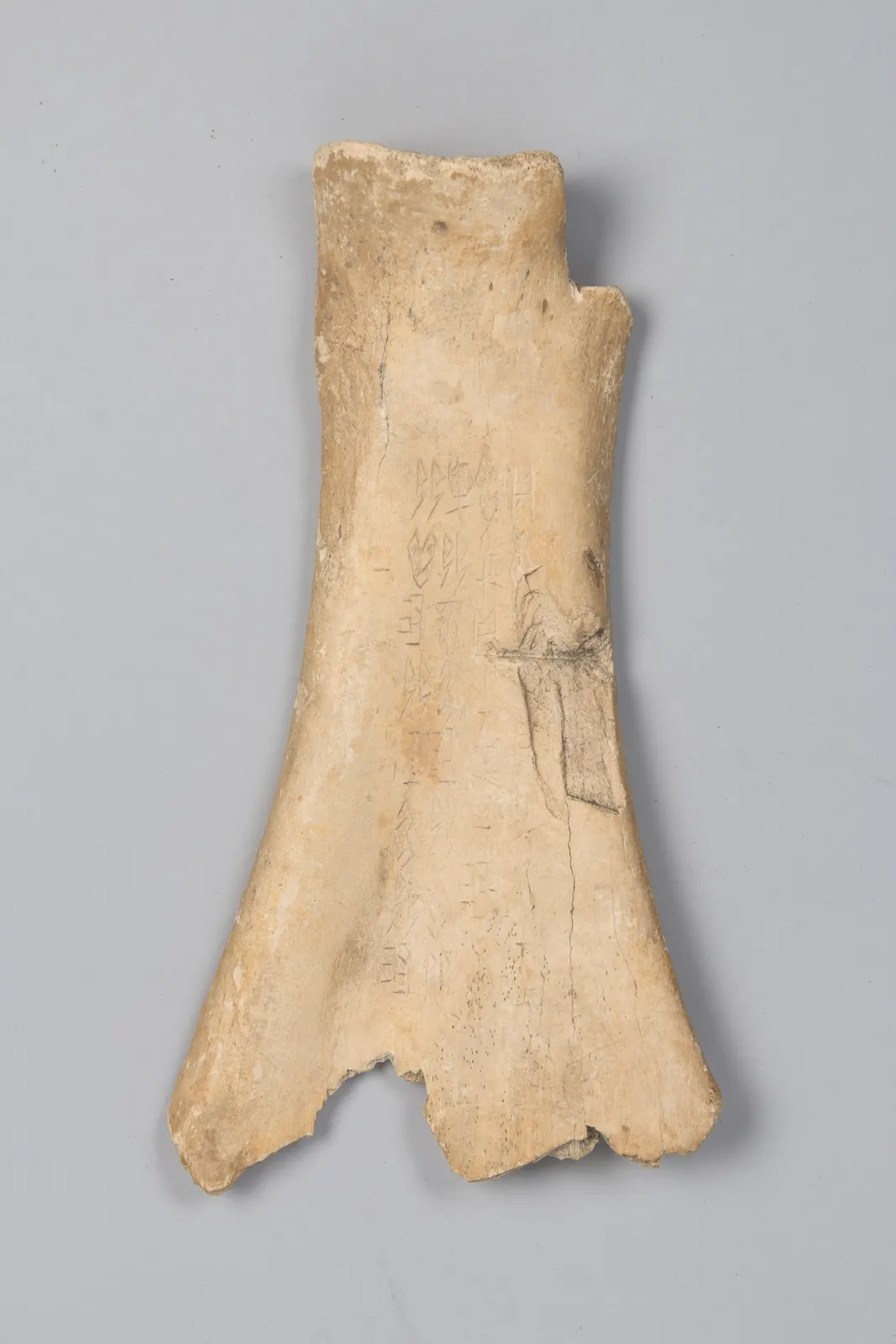

The verification: what happened
How sure are the dates?
Sure enough to be within a few decades, which for events 3,000 years ago is close. But not exact.
Where experts disagree: when did the Shang end?
1046 BC, the date most museums give.The Met, like most museums, dates the Shang dynasty to about 1600 to 1046 BC, ending with the conquest by the Zhou.6
About 1041 BC, from radiocarbon.A 2021 study dated a sequence of oracle bones and put the end of the Shang around 1041 BC. Five years is close, but the two methods are not the same evidence.3
Either way, the Shang did not vanish. Their capital became a ruin, but the script on the bones grew into the Chinese characters written today.4
Every lesson is written for anyone. Choose a course and the lessons that match it are marked.
National curriculum, Key Stage 2: “a depth study of one of the following: Ancient Sumer; The Indus Valley; Ancient Egypt; The Shang Dynasty of Ancient China”
If your school chose the Shang, both chapters fit. Start with the oracle bones.
We are not an exam board. Check the details against your own course.
We have not matched this subject to a GCSE or A level course yet. Read it as an introduction.
We have not matched this subject to a GCSE or A level course yet. Read it as an introduction.
Sources for this page
Every number on this page comes from one of these. How we check.
Last reviewed 12 November 2026. Spotted a mistake? Tell us.
- Keightley, D. N. (1978). Sources of Shang History: The Oracle-Bone Inscriptions of Bronze Age China. Berkeley: University of California Press. search.worldcat.org/search?q=Sources%20of%20Shang%20History%20Keightley%201978Used for: How a divination was made and recorded, what the kings asked about, and the inscription about Lady Hao’s childbirth (Heji 14002). Checked 12 November 2026.
- Xu Yahui (2002). Ancient Chinese Writing: Oracle Bone Inscriptions from the Ruins of Yin. Taipei: National Palace Museum. search.worldcat.org/search?q=Ancient%20Chinese%20Writing%20Oracle%20Bone%20Inscriptions%20from%20the%20Ruins%20of%20Yin%20Xu%20YahuiUsed for: The parts of an inscription; how the bones were first noticed in 1899 and the doubts about the story; the pit YH127. Checked 12 November 2026.
- Liu, K., Wu, X., Guo, Z., Yuan, S. and others (2021). Radiocarbon dating of oracle bones of Late Shang period in ancient China. Radiocarbon 63(1), 155–175. doi.org/10.1017/RDC.2020.90Used for: Radiocarbon dates for King Wu Ding’s reign (1254 to 1197 BC) and for the end of the Shang (about 1041 BC). Checked 12 November 2026.
- British Library, Asian and African Studies blog (2014). The Couling-Chalfant collection of oracle bones in the British Library. britishlibrary.typepad.co.uk/asian-and-african/2014/06/the-couling-chalfant-collection-of-oracle-bones-in-the-british-library.htmlUsed for: Shang oracle bones as the oldest known Chinese writing, and the ancestor of today’s characters. Checked 11 November 2026.
- Ebrey, P. B. (2006). The Cambridge Illustrated History of China. Cambridge: Cambridge University Press, pages 26 to 27. search.worldcat.org/search?q=Cambridge%20Illustrated%20History%20of%20China%20EbreyUsed for: Lady Hao as a consort of Wu Ding and a military leader, and her tomb as the only Shang royal tomb found unlooted. Checked 12 November 2026.
- The Metropolitan Museum of Art. Ritual tripod cauldron (ding). Shang dynasty, 12th–11th century BCE. Collection record 61239, Open Access (CC0). www.metmuseum.org/art/collection/search/61239Used for: A round cauldron on three legs, 25.4 cm high. Checked 12 November 2026.
- The Metropolitan Museum of Art. Oracle bone. Inscribed bone. Shang dynasty, ca. 1600–1046 BCE. Collection record 60696, Open Access (CC0). www.metmuseum.org/art/collection/search/60696Used for: An inscribed oracle bone, 23.5 cm long. Checked 12 November 2026.
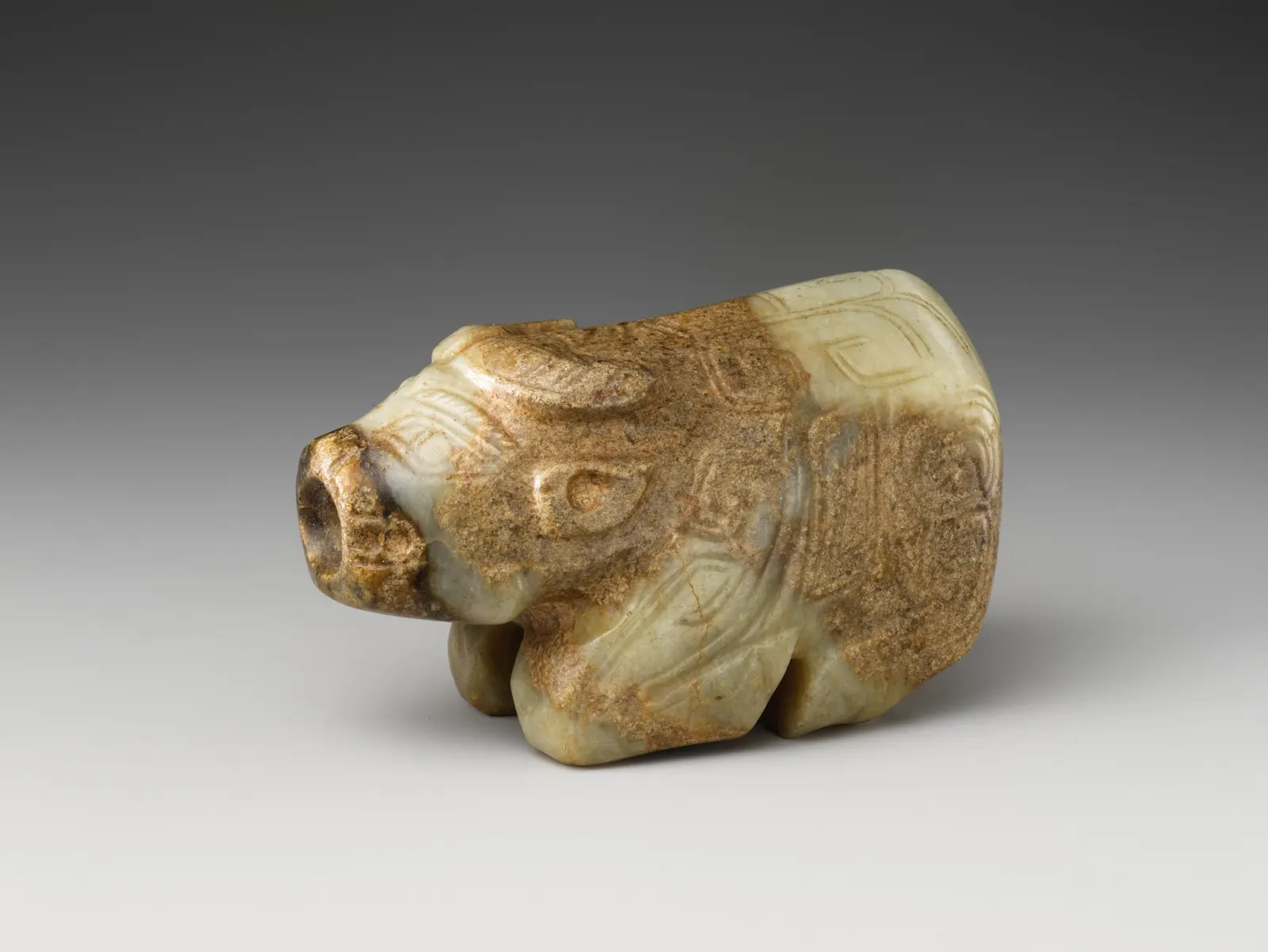
- The Metropolitan Museum of Art. Water buffalo. Jade (nephrite). Shang dynasty, 13th–11th century BCE. Collection record 44778, Open Access (CC0). www.metmuseum.org/art/collection/search/44778Used for: A small jade water buffalo, 6.5 cm long. Checked 12 November 2026.
- Natural Earth, 1:110m and 1:50m land, public domain, via the world-atlas package by Mike Bostock (ISC licence). www.naturalearthdata.com/Used for: Every coastline drawn on this site. Checked 11 November 2026.