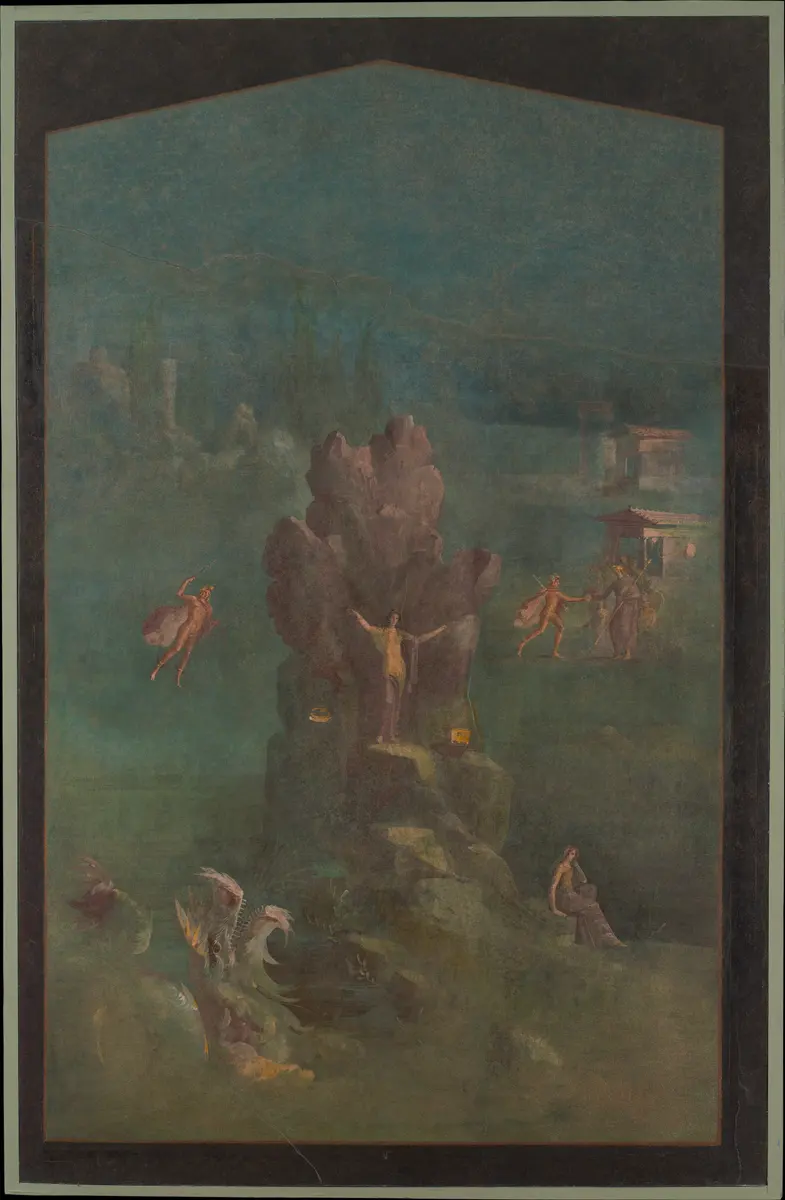
A Roman wall painting of Perseus and Andromeda, from a villa at Boscotrecase near Pompeii, buried in AD 79
Wall painting: Perseus and Andromeda in landscape, from the imperial villa at Boscotrecase, last decade of the 1st century BCE
Marked Pompeii

SubjectIn outline · lessons being written

Pompeii and Herculaneum

When Vesuvius erupted in AD 79, it buried two Roman towns in ash and hot gas. Rediscovered from 1738, they show daily life in astonishing detail: shops, graffiti, food on tables and the shapes of the people who died.

Date
Buried in AD 79VI · The classical world
Place
Pompeii · Herculaneum · Oplontis · VesuviusEurope
Laid out as
A siteOne place known mainly from digging, read layer by layer from the top down.
Lessons
6 planned, none written yet

The lessons we plan

Titles may change as they are written

  1. IThe eruption, hour by hour
  2. IIPliny’s letters
  3. IIIStreets, shops and bars
  4. IVGraffiti
  5. VPlaster casts of the dead
  6. VIReading the burnt scrolls

Still to come

The people and objects these lessons will cover

People

  • Pliny the Elder
  • Pliny the Younger
  • Giuseppe Fiorelli

Objects

  • The plaster casts
  • Herculaneum papyri
  • The Cave Canem mosaic

Where it sits

All of human history, era by era

This page is an outline. The summary above is a starting point; each lesson, when it is written, will give its sources, its pictures and where historians disagree. Spotted a mistake?