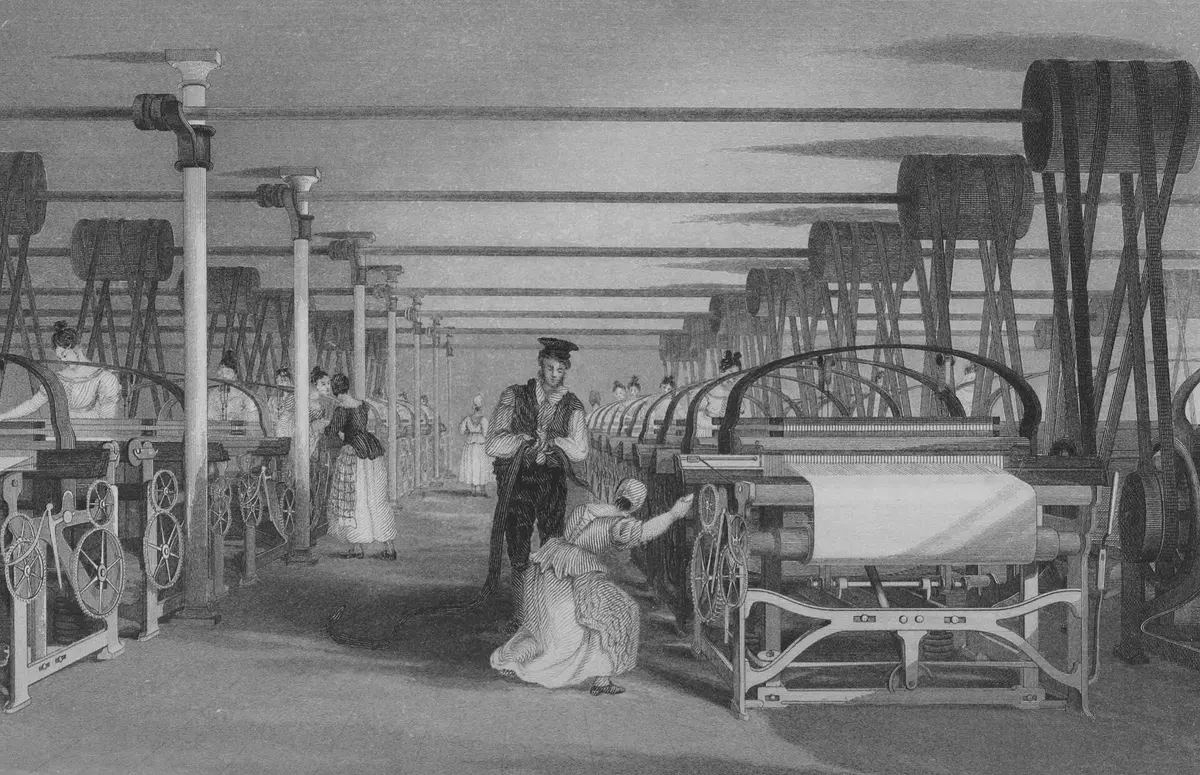
An engraving of a factory weaving shed in 1835, rows of power looms driven by belts from the ceiling
Power loom weaving, 1835
Marked Coalbrookdale

SubjectIn outline · lessons being written

The Industrial Revolution

In Britain, steam engines, coal and new machines for spinning and weaving moved work from homes to factories. Manchester, “Cottonopolis”, became the world’s first industrial city, and child labour, smoke and slums came with it.

Place
Coalbrookdale · Cromford · Manchester · Quarry Bank Mill, StyalEurope
Laid out as
A revolutionHow things were before, the moment it turned, and how things were after.
Lessons
7 planned, none written yet
Image
Thomas Allom (drawing), J. Tingle (engraving), Wikimedia Commons, Public domain

The lessons we plan

Titles may change as they are written

BeforeMost people farmed, and cloth was spun and woven by hand at home.

  1. ISpinning jenny and water frame
  2. IIWatt’s steam engine
  3. IIICottonopolis
  4. IVChildren in the mills
  5. VCanals and coal
  6. VICotton and slavery
  7. VIIMachine breakers

AfterFactories, machines, steam, and towns that grew faster than ever before.

Still to come

The people and objects these lessons will cover

People

  • Richard Arkwright
  • James Watt
  • Abraham Darby
  • Ned Ludd (in legend)
  • Friedrich Engels

Objects

  • The Iron Bridge
  • A Boulton and Watt engine
  • Mill registers

Where it sits

All of human history, era by era

This page is an outline. The summary above is a starting point; each lesson, when it is written, will give its sources, its pictures and where historians disagree. Spotted a mistake?