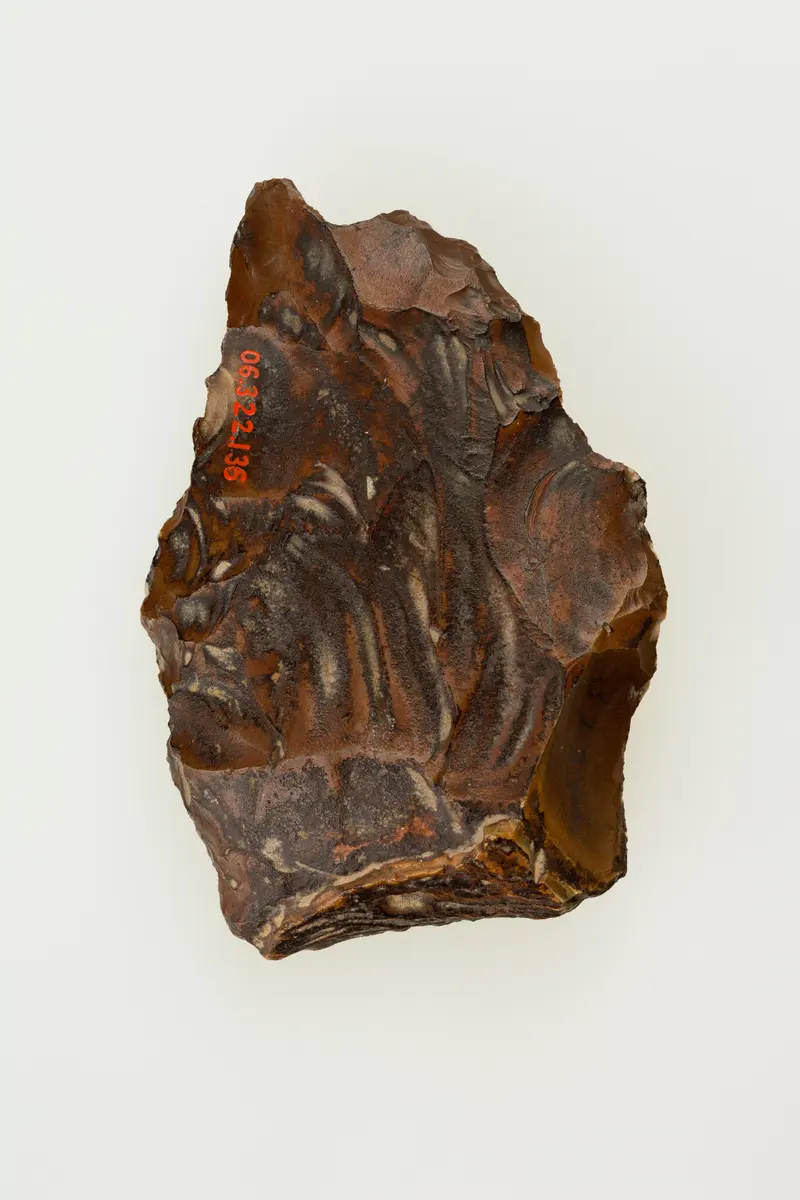
A flint hand axe from the Lower Palaeolithic, shaped by striking flakes off both faces
Biface, commonly referred to as a hand ax, ca. 400,000–240,000 B.C.
Marked Lomekwi 3, Kenya

SubjectIn outline · lessons being written

The first stone tools

Long before our own species, our ancestors in Africa began to strike flakes off stones to cut and scrape. The oldest known tools, from Lomekwi in Kenya, are about 3.3 million years old; hand axes followed about 1.7 million years ago.

Place
Lomekwi 3, Kenya · Olduvai Gorge, Tanzania · Gona, EthiopiaAfrica
Laid out as
An inventionA new way of doing something, link by link: what came before, the breakthrough, and what it changed.
Lessons
5 planned, none written yet

The lessons we plan

Titles may change as they are written

BeforeSharp edges came only from nature: broken stones, teeth and claws.

  1. ILomekwi: older than any human
  2. IIOlduvai Gorge and the Leakeys
  3. IIIThe hand axe, a tool for a million years
  4. IVHow to read a broken stone
  5. VWho made the first tools?

AfterAncestors could make a cutting edge whenever they needed one.

Still to come

The people and objects these lessons will cover

People

  • Mary Leakey
  • Louis Leakey
  • Sonia Harmand

Objects

  • Lomekwian cores and flakes
  • Oldowan choppers
  • Acheulean hand axes

Where it sits

All of human history, era by era

Nearby in time and place

This page is an outline. The summary above is a starting point; each lesson, when it is written, will give its sources, its pictures and where historians disagree. Spotted a mistake?